

Isaiah 9:2-7; Psalm 96; Titus 2:11-14; Luke 2:1-14, (15-20)
When the Angels appeared to the shepherds, they delivered a message that was precise and powerful. They told them who is born, where they can find him, and how they will recognize them. This commentary is about the first of those three issues: who is born.
The Angels used three titles to describe this newborn child: Savior, Christ, Lord. As Savior he is the one who has come to deliver God’s people from the current distress and to bring them freedom. As Christ, he is the anointed leader to take God’s people forward into the future of what we might call the Beloved Community. As Lord, he is the embodiment and source of everything that is good.
You might look at these three titles as identities. These identities are laid upon Jesus, not by his choice, but by virtue of his birth. Jesus is identified as Savior, Christ, and Lord before he does anything. He is Savior before he does a single salvific act. He is Christ before he calls a single follower. He is Lord before he performs any miracle. All those titles were his before he knew what they were. He was all of those identities before he could articulate what they meant.
We too are born into our identities. We did not choose to be two spirit, transgender, non-binary, gay, lesbian, bisexual, pansexual. We have been born into them, as Jesus was born into his.
By age 12 Jesus was aware of his connection with his heavenly Father. But we are told he continued to grow in that awareness and identity as Savior, Christ, Lord. The scriptures tell us that at age 30, Jesus stepped into his public ministry, knowing who he was. He lived it out in what he did and what he said. His ministry changed the world.
Like Jesus we too grow and develop in our identities. Our awareness of and our ability to articulate our identities grow over time. Some of us live out our identities more publicly. Some of us live them more privately. However, I firmly believe that for us to follow Jesus is to live out identities in whatever way we are called to do so. That is the work of a lifetime.
As Jesus brought the good news of God’s love for all, he encountered people who saw in his life who he was by birth: Savior, Christ, Lord. They embraced him. They followed him. They became the community of Jesus, affirming him as Savior, Christ, Lord.
Throughout the gospels he is affirmed in his identity.
Nathaneal said of him, “Rabbi you are the King of Israel.”
The people of Samaria said, “He is the Savior of the World.”
Peter said, “You are the Christ, the Son of the Living God.”
Martha said, “Yes, Lord I believe that you are the Christ, the Son of God coming into the world.”
The crowd on Palm Sunday said, “This is the Son of David. The One who comes in the name of the Lord.”
Thomas said of the risen Christ, “My Lord and my God.”
As trans, non-binary spirit people it is a blessing when we encounter those who affirm our identities. We know the joy of those who say to us, “You are who you say you are. We see you. We affirm you.” Those are the communities that hold us as beautiful and precious, and those are the communities that we hold as beautiful and precious.
However, as we know, there were many who did not embrace Jesus. They did not affirm him as Savior, Christ and Lord.
This innocent baby would become the target of a powerful political figure: King Herod. Because of his identity, Herod wanted him dead. And he was willing to kill other innocent children to get rid of that one child.
When Jesus begins his public ministry Satan himself attacks his identity and demands proof that he is the Son of God. This theme continues in the Gospels until Jesus is dying. Even then his identity is attacked by those demanding proof, saying “If you’re the Christ, save yourself.” From the wilderness to the cross, from the start to the finish, his identity is attacked.
Like Jesus we should not be surprised when our identities are assaulted and when people bombard us with the “Prove it” attack. Our work is to live out our lives as who we are, as best we can. To live our lives with integrity and dignity.
Jesus is not trying to prove his identity. He is living into the identity that he was born into – Savior, Christ, Lord. And too with us, we live our lives. We live our lives knowing that just as there were those who denied the identity of Jesus, there will be those who deny our own. But we keep living as the people we are born to be whether publicly or privately, but we all must live it out.
The angels said that the birth of the child was good news of great joy for all people. And that is true. Still, for many of us, this season is painful as many of us endure the hurt of rejection, estrangement and isolation that is often part of the gender-nonconforming experience. I get that. I feel it too. For too many of us there is not a lot of joy in this season.
However, I would argue that there is still good news even if it doesn’t always bring us great joy. The good news is that you are you, born into your identities, as Jesus was born into his. The good news is that in Jesus God has tasted some of our pain and offers us life and hope in the midst of that pain. The good news is that you are deeply loved by God. The good news is that you carry the image of Christ; crucified and risen. And if there is any group who shows the world another way of living together in peace, it is us. We know the pain of life and hold the hope of new life, for ourselves and for the larger community.
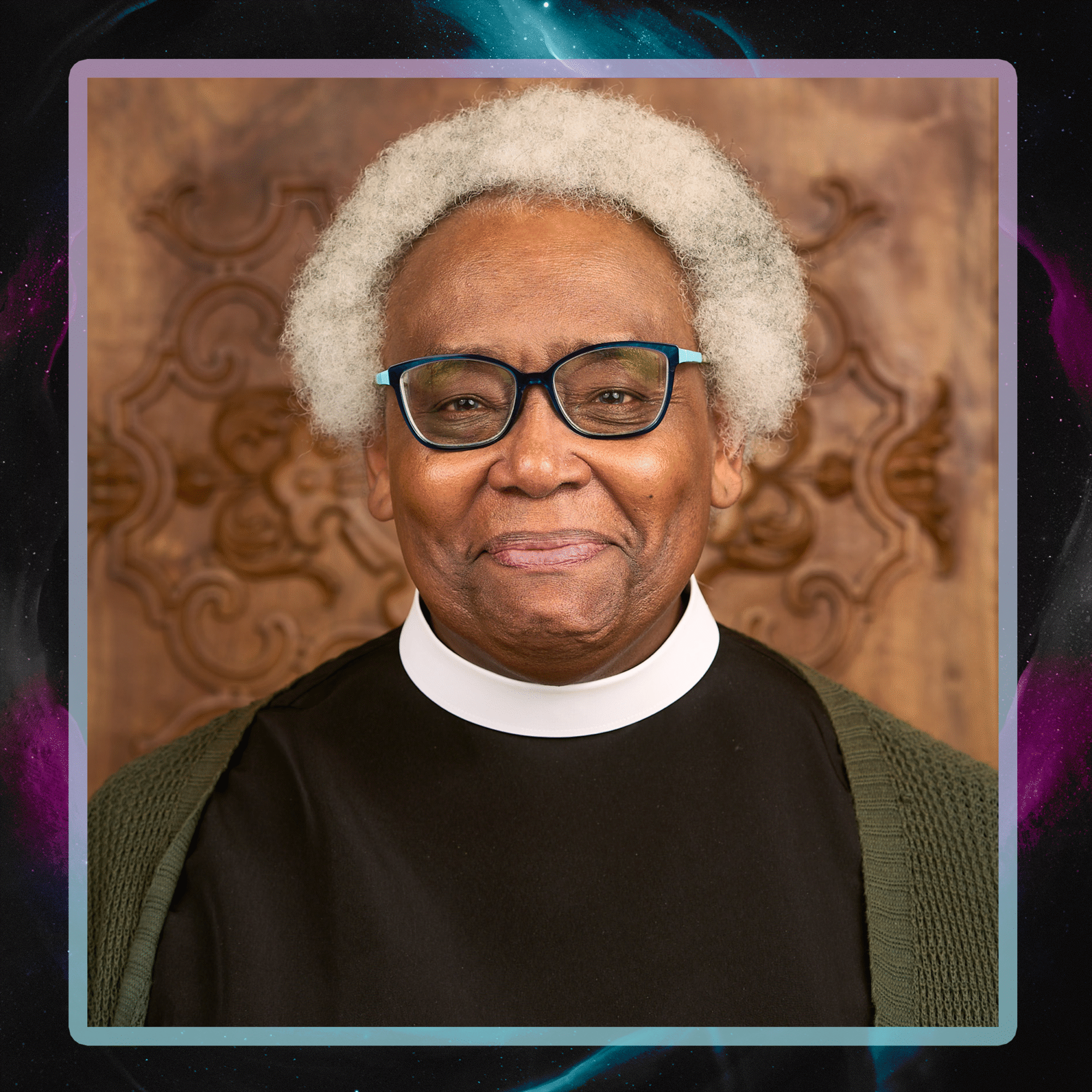
The Rev. Carla Robinson, a graduate of Concordia Seminary (St Louis, MO), served as a Lutheran pastor for 13 years before coming to the Episcopal Church. She was received into the communion in 2001 and was an active member of St Mark’s cathedral for several years. She has served as the Administrative Assistant for Multi-Cultural Ministry and the Secretary for Vocations in the Diocese of Olympia. Since her ordination in 2009 she has served as the curate at the Church of the Resurrection in Bellevue and as the vicar of All Saints in Seattle’s Rainier Valley neighborhood. She has served as associate priest at St Mark’s Cathedral, The Church of the Ascension in Magnolia, St James in Kent, Christ Church in the University District and St Matthew San Mateo in Auburn. In 2022 she became the Canon for Multicultural Ministries and Community Transformation in the Diocese of Olympia.


Unbound Social