
Ezekiel 37:1-14; Psalm 130; Romans 8:6-11; John 11:1-45
O Lord God, Only You Know
As an Old Testament specialist, there are few texts which capture my imagination in the way that Ezekiel 37, the vision of the valley of dry bones, does. Of course, this is in large part due to the bizarre imagery. The visuals of bones stitching themselves back together and skin materializing on top sounds more like a scene from a horror film than a vision of hope, healing, and vitality from a biblical text (vv. 6–8). Nevertheless, it is exactly this strangeness that spotlights not only the extent of God’s miraculous power, a consistent theme proven time and time again throughout the biblical texts, but also the shortcoming of the human perception of imagining what can be and will be.
The Book of Ezekiel is a reflection on the tension of displacement, the violence of exile, in the aftermath of the Babylonian conquest of Jerusalem and destruction of the temple in 587/6 BCE. Many of the people of the southern kingdom of Judah had been displaced from their homes and forced into a foreign land; those who remained in the land of Judah faced the pressure of foreign rule which prioritized its own interests. We are told at the very beginning of the book that Ezekiel’s visions take place as he is among the exiles in Babylon (Ezekiel 1:1–3). This itself is a remarkable statement: the author makes clear that, far from being limited to the land of Israel, God travels with his people wherever they might be. It also highlights that, though a prophet granted a miraculous, unique experience of the divine (Ezekiel 1), Ezekiel is not separate from the plight of his people.
Throughout the book, the Spirit of the Lord constantly transports Ezekiel to and fro, forcing him to bear witness to desolation and death. In the scene in chapter 37, the Spirit takes Ezekiel to a valley full of dry bones. This is not just a premonition of what could be but a fully embodied, visceral experience for the prophet. These are the bones of victims, his own people, the bones themselves the result of military invasion and oppression.
As biblical texts grapple with the meaning of exile, exile is portrayed as the just result of the people’s rebellion against God and the divine covenant – a covenant which mandates mutual care and social justice (cf. Isaiah 58). The tension of the exile experience paves the way for our biblical authors to wrestle carefully and honestly with their relationship to God, reflecting on their own spiritual stagnation and the state of their community in order to envision a path forward. This is why Ezekiel’s position “among the exiles” is so important: he himself is one of them. Though commissioned to speak on behalf of God, it is his role to also speak on behalf of his people, to plea to the God of justice for justice and mercy on their behalf, to respond to their sufferings as in the past (cf. Exodus 2:23–25).
The context of chapter 36 leading into this scene is likewise fundamental. Before God calls Ezekiel to prophesy to the dry bones, God calls him to prophesy to the mountains and valleys so that justice may be done to them as well, a demonstration of the interconnectedness of human life with that of the earth and creation. As we are reminded at the beginning of the Lenten season from the words of Genesis 3:19, “dust you are, and to dust you shall return.”
Yet observing the previous context of Ezekiel 37 highlights a question: why, even after having just heard and received the word of the Lord which promised the renewal of life, does Ezekiel respond to God’s question of whether it is possible for the bones to come alive again with the words, “O Lord God, only You know” (v. 3) ? Ezekiel’s reticence to answer directly could be taken as the result of doubt. However, doubt is not the same as grief, and grief is not in opposition to faith. Similarly, Martha expresses both this hope and grief (John 11:19–27)—as well as a doubt lingering in the shadows of her hope (11:39–40).
Nevertheless, we can also observe in both, a humility: “O Lord God, only You know”—as You say, I am only a mortal (Ezekiel 37:3, 11); I do not know what you know and cannot do what you can do. “I believe that You are the Messiah coming into the world and that he will rise again” (John 11:21–27)—but I do not know what this means or what You will do in the present moment. Not all the bones of the land were resuscitated; not every death was reversed.
Furthermore, we may also ask, if our hope is in a final resurrection, a future glory that creation and we, along with it, long for (Romans 8:18–23; see also Ezekiel’s vision of restoration in Ezekiel 40–48), what is the point of these accounts? Would it not have been better for Lazarus, as Martha observes, to rise again in the end, to not have to face again here the pain of the human experience?
However, as Jesus himself says to Martha in our reading, he is both the resurrection and the life (John 11:25). The hope of Easter is not just the hope of eternal life in a far-off time, far from it. It is the hope of restoration, of vitality, and the promise of life in this world, in the here-and-now. It is a faith full of reverence for the gift of life, one that recognizes the interconnectedness of human life with one another, where the deprivation of one is the deprivation of all. It is an active faith that seeks to breathe life into what is dead and restore it to its full potential and beyond.
Nevertheless, Ezekiel’s response, “O Lord God, only You know,” recognizes the ambiguity of human experience, the constant state of potential, the tension between the known and the unknown, life and death. Like Ezekiel and Martha, the psalmist of Psalm 130 struggles with their liminal position. Yet this language of the soul waiting for the Lord (vv. 5–6) suggests that these dark spaces of life are not spaces of death, but spaces with the potential for divine encounter. The darkness of night is the signal for the expectation of divine deliverance, the reminder that hope is an active choice to believe in the divine power of restoration (v. 7).
As I have been in especial anticipation for the Lenten season this year, I find myself resonating with Ezekiel. I mourn with a full-hearted knowledge and belief in the God of life and vitality, and yet an exasperation in response to what I see: a church that has foregone its mission, a faith I hold dear being desecrated and profaned at the altar of the nation-state, of self-service, of bigotry, wondering if we, the church, as a body have fallen past the point of return. Thus, I find in myself and in this Lent the need to activate my hope, to set the conscious intention to embrace the posture of Martha: “O Lord God, only You know; but I know that even now God will give you whatever you ask.”
We are filled with the Spirit that gives life, that is able to animate the dry bones, to give life to our mortal bodies and bring us life and peace (Romans 8:6–11). In this Easter season, let us join with our cloud of witnesses who can testify that in every season of despair, ours is a living hope with the potential to activate all that is around.
This Lent, let us:
- Focus inward to pour outward. In both of the narrative texts of our readings, there is an active participation in the process of bringing life: both Ezekiel and Jesus speak to that which is dead. Yet they each do not act in haste but only after times of reflection and discernment. Likewise, though the psalmist waits, the psalmist takes the initiative to implore the Lord to act on divine promises.
- Find a community with whom to mourn, and then to hope. As we can see throughout the Old Testament, being a prophet is quite lonely business, and although his mission is for his community, Ezekiel carries the burden of grief on his own. In stark contrast, the scene of Lazarus depicts a community grieving together. Likewise, the psalmist goes beyond their own needs and exhorts the community to join in their example. We are here to speak life to one another, and share the burdens of our common humanity in unity.
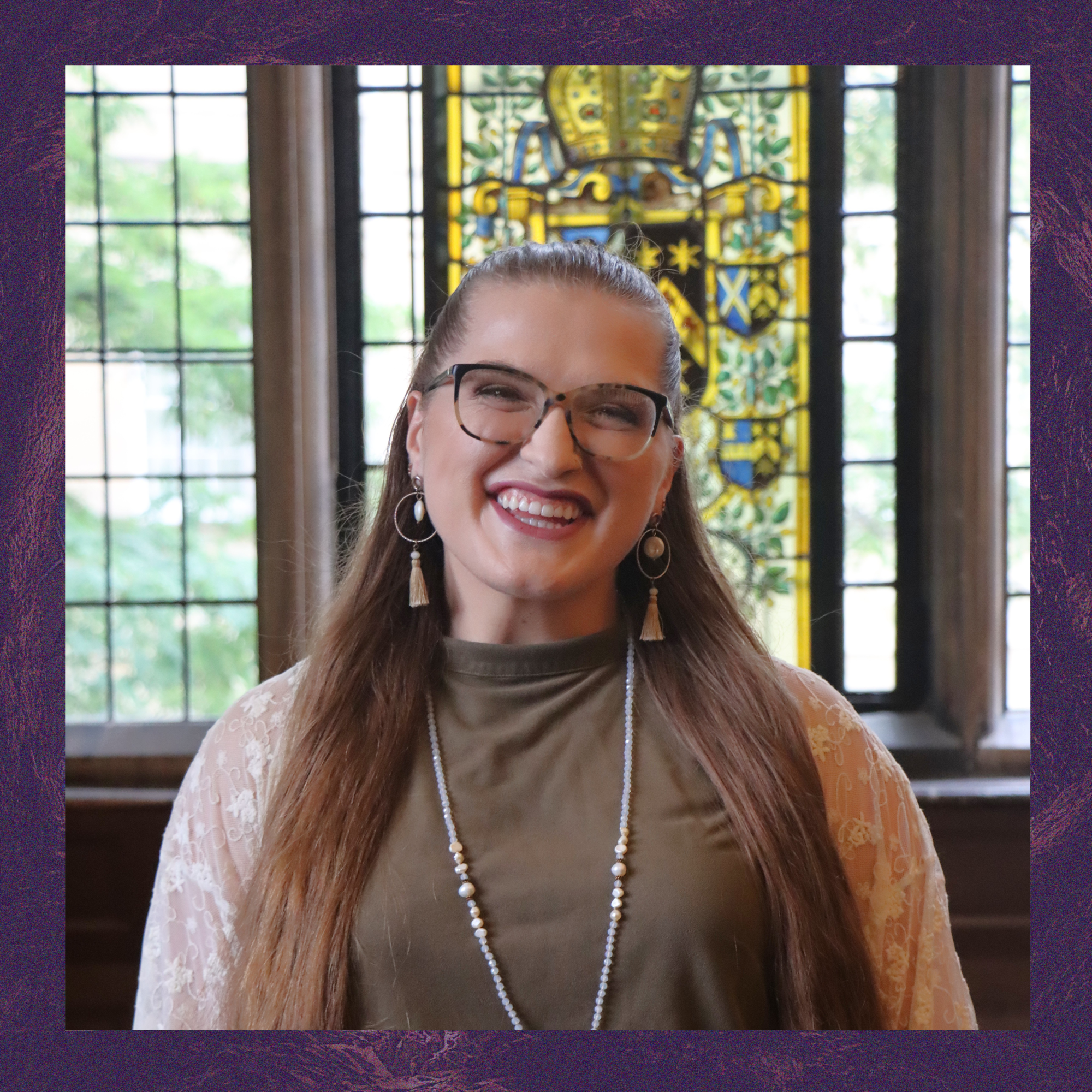
Ruthanne Brooks is a DPhil (PhD) candidate in Hebrew Bible/Old Testament at the University of Oxford, UK. Her research specializes on concepts of wisdom and philosophical thinking in the Hebrew Bible and Second Temple Judaism with a particular focus on concepts of mystery and divine hiddenness. She is passionate about showing students the richness and vibrancy of biblical texts and their ongoing life throughout countless generations of transmission, reception, and interpretation.

Unbound Social