
Psalm 118:1-2, 19-29; Matthew 21:1-11
I want to start by being vulnerable with you. It has been hard to write this devotional. Not because my love for God is not strong, nor because I do not enjoy the season of Lent, but like so many of you, my soul feels heavy from the reality of the world. As I write this, our comrades in Minnesota are dealing with the presence of ICE in their state. There have been multiple deaths at the hands of government officials and sitting at my desk, in front of a laptop feels disconnected from the realities of life. I have started writing, walked away, started again, only to walk away once more. In between breaks of writing, I check in with a dear friend on the ground in Minneapolis and learn of protests in sub-zero temperatures. I hear her stories of community gatherings and the care being given to those most vulnerable. After many days of this routine, trying to write, walking away, chatting with her, rinse and repeat, it finally dawned on me that Palm Sunday – a moment of joyful procession and holy disruption – is applicable to this moment more than ever.
Palm Sunday is riddled with emotional complexity, a time of when celebration cuddles with the awareness that Holy Week leads Jesus to the cross. Likewise, we find ourselves at a moment of emotional complexity. We feel the grief and mourning that we are losing a reality in this country we thought we knew, but also the hope and longing that liberation might be on the other side of this turmoil. We typically think of Psalm 118 as a psalm that was traditionally sung during festival processions, making it an organic backdrop for Palm Sunday, while Matthew 21 reveals Jesus’ entry into Jerusalem with crowds waving branches and shouting “Hosanna.” Together, they provide us with a liturgical base that many follow for worship on Palm Sunday. However, upon closer reflection they remind us that praise and protest are not opposites in scripture, nor in our lives, but instead they often coexist together. That not only do they coexist together, but often praise is a form of protest. These pericopes invite us to remember that entering God’s ‘gates’ means stepping into public spaces with courage, humility, and hope. When we do so we can settle into the truth, that even with the ever-present reality of injustice, polarization, and fatigue, that which seems like death could very well be the beginning of something new rising up.
Exploring Psalm 118: 1-2; 19-29
Psalm 118 shows us what it means to possess a worship infused with an understanding of justice. Verse one tells us to “give thanks to the Lord, for God is good.” Our world is shaped by fear and scarcity, and systems of oppression are maintained by having us believe that everything is gloom and doom. The constant bombardment of bad events dysregulates our nervous systems and it is difficult for us to remember that we have much to give thanks for. As such, gratitude becomes a countercultural act. We give thanks not just because God is God, but because in doing so we root ourselves to the truth that life still holds goodness that is worth acknowledging. If there is goodness now, then there is the possibility for even more goodness in the future.
Similarly, when Psalm 118:19 says, “Open for me the gates of righteousness” it serves as a reminder that the reality we face is not all that is possible for us. Righteousness in this verse is not about personal piety, but about being in right relationship with God, neighbor, and community. This psalm of praise declares that we, as creations of the Divine have access to a justice that is greater than this moment, and we will walk through its gates.
Further, we know that the justice we have yet to see is coming because Psalm 118:22 tells us, “The stone the builders rejected has become the cornerstone.” God has a history of uplifting the marginalized and making them the center of change and importance. Presently, we can see how God is working through those dismissed by systems of power to awaken the country to new possibilities! Collectively, these verses demonstrate that the psalmist’s praise is not passive, but a declaration that God’s love forecasts and outlasts oppression. Equally, let us use our worship as a launching point for justice-oriented living.
Exploring Matthew 21:1-11
Matthew 21:1-11 gives us an immeasurable example of Jesus modeling what it means to be a public witness. Verse five tells us that he was “gentle and riding on a donkey.” Not only does this fulfill prophecy, but it is a public demonstration that signals a kingdom of peace, not domination. Jesus’ presence served as a counter-parade to Rome’s military processions. Likewise, let us be inspired by his actions and move in the world knowing we are the opposite of the injustices we see around us.
We can be this opposition to oppression by being like the crowd around Christ that yelled “Hosanna!” as he entered Jerusalem (verse 9). Their yells were more than an acknowledgment of Jesus as Savior, but a plea for the liberation they believed he would bring forth. Too, let us wave our “palms” and cry for victory, hope, and resistance against subjugation. When we do so we follow the tradition of Palm Sunday, one that reminds us that our faith is not a quiet religious moment, but an embodiment that is meant to disrupt the status quo.
Importantly, this pericope in Matthew illuminates that Jesus as Messiah is not the only significant part of the story. While Jesus models being the ultimate public witness to tyranny, the crowd importantly participates in the affirmation of Jesus’ role. They provide a collective act of hope, proclaiming an altered way of life is possible. Let their example be a reminder to us of the importance of being co-participants with God in ushering in a new society.
Jesus’ entry exposed the tensions between God’s idea of kinship and the unjust systems of empire that people faced. We can easily see the parallels between this moment in Jesus’ ministry and our own contemporary lives. We are in a historical moment that demands we sit in the tension of what some say is right, and what we know is wrong.
Overall, both Psalm 118 via a procession towards the temple, and Matthew 21 via a procession towards the city, show the importance of public, communal praise and the way it can also function as protest. Further, both passages remind us that Palm Sunday is a call to embodied faith, where worship and movement co-align, public witness is tethered to praise, and the call of “Hosanna” functions as a prayer and declaration. The two unveil that joy is entwined with struggle and activism requires courage, resilience, and trust in a greater liberation to come.
A Moment of Practical Application
As you continue to think about the significance of Palm Sunday and what it means to your life and your community’s wellbeing, I encourage you to take a moment to engage in a prayer for Hosanna. Start by answering:
Where in my life and in society do I long for God’s saving presence to enter?
Remember, honest lament can fuel faithful action. Furthermore, praying for God’s presence not only reveals where we would like to see more justice, but it also helps us to identify where we can be co-creators of liberation with the Divine.
As such, write down what comes to your heart and use your prayer to help you identify your ‘gate’ to enter.
A gate might be:
- A community organization you volunteer at
- A justice initiative you donate to
- A difficult conversation you might need to have
- A protest or march you show up for
For each of us, our gate(s) will be different, but Palm Sunday reminds us that faith moves us into public spaces.
Next, review your schedule, finances, emotional and physical capacity, and set aside time to enter your gate. I encourage you to not put this step off until later. Instead, right here, right now, decide when and how you will show up. Remember you do not have to be the most educated, the richest, or even what others would consider qualified. Instead, be inspired by Jesus’ humble riding on a donkey procession and commit to a practice of unpretentious advocacy, accompaniment, and solidarity with marginalized communities.
If you are already involved in many ‘gates’ use this step to refocus your commitment and continued growth. How will you continue to sustain yourself and show up for others? What does rest look like for you? How can you educate yourself and connect with new partners in the fight for justice?
Next, consider the ‘palms’ you will wave as you do the work. Stated another way, what are the symbols of hope you can provide to others, and what are the symbols of hope you need to keep fighting? I recently heard a prison abolitionist say, “hope itself is not a strategy, but it is the foundation of all good ones.” We need hope to continue this fight for liberation. Take a moment to identify what you can offer as a sign of hope. That might be:
- Your voice or writings
- Your musical talents or creative contributions
- Your financial and material resources
- Or simply, your presence in a difficult time
As you identify your ‘palms’ remember to not discount what you bring to the table. You, and whatever you offer represent the possibility of a different kind of world!
Finally, conclude by considering the community you need to start or continue doing justice work. What organizations already exist so you don’t have to recreate the wheel? Who can you partner with to help encourage you when it gets difficult? Who can you teach and learn from to help you grow? What resources can you access to stay physically, mentally, and emotionally safe?
Palm Sunday, like justice work, is communal. It is the ever reminder that no one walks alone, and that justice work is sustained through shared commitment.
A Concluding Blessing
Blessed are those who are unsure of where to begin or continue.
Blessed are those who hear their calling but still seek courage to answer.
Blessed are those whose feet are planted, yet they still feel the wind blowing around them.
Blessed are those who are tired and still wave their palms.
Blessed are those whose praise is a protest and protest a praise.
Amen.
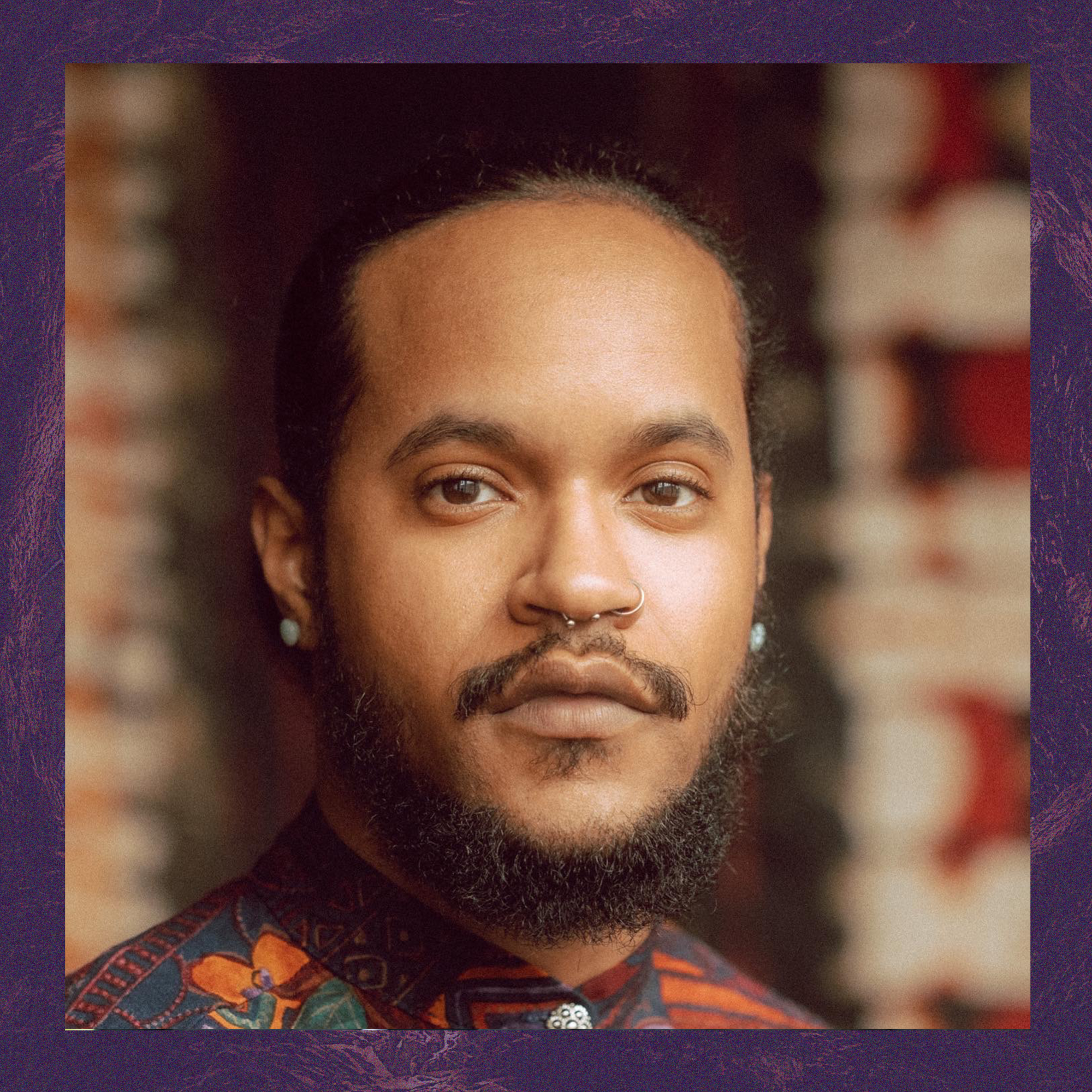
Rev. John D. Blackshire, Ph.D., is an educator, impact strategist, and minister who helps individuals and organizations identify small yet mighty ways to accomplish radical social justice goals. He is the founder and executive director of There’s Room of North Carolina, a grassroots organization that works to improve the spiritual, emotional, and economic well-being of Black LGBTQIA+ individuals in the South. John formally served as an assistant professor of gender studies at Skidmore College and was an ACLS Leading Edge Fellow in 2021. Overall, he feels best when empowering others to leverage their agency to transform their communities for good.

Unbound Social