
Exodus 12:1-4, (5-10), 11-14; Psalm 116:1-2, 12-19; 1 Corinthians 11:23-26; John 13:1-17, 31b-35
Revolutionary Love, and the Rituals of Repentance and Redemption
Lent invites us into the dangerous work of remembering.
Not the soft remembering of nostalgia, but the disruptive remembering that unsettles empire. Lent calls us to remember who we are beneath the lies that those in power tell us about our worth. To remember who God has been in the long arc of liberation. To remember what it costs to love in ways that cross boundaries, threaten hierarchy, and refuse dehumanization.
Across the lectionary texts appointed for Maundy Thursday, a pattern emerges: liberation is never abstract, and love that reorganizes power is always met with resistance. On this night in particular, liberation is carried not only through words—but through ritual.
As Arnaé Batson’s song names what so many of our bodies know:
Justice,justice,justice,justice
Ooooh,ooooh,oooh
Let it be so
Justice
This is not a slogan. It is a prayer. A chant. A vow.
I often return during Lent to Huey P. Newton’s concept of revolutionary suicide. Newton understood that any individual or movement capable of exposing the contradictions of the state—especially by uniting people across lines of historic division—would inevitably be met with repression: surveillance, incarceration, assassination. History bears this out.
Fred Hampton was murdered as he helped build the Original Rainbow Coalition, uniting poor Black, Brown, and white communities. Rev. Dr. Martin Luther King, Jr. was executed as he prepared to launch the Poor People’s Campaign, naming racism, poverty, and militarism as interconnected evils. And long before them, Jesus of Nazareth was killed by the state for proclaiming a kingdom that threatened empire by reorganizing power from the bottom up.
Love that redistributes power is never considered safe.
Yet in my formation as a minister and organizer, I have come to understand revolutionary suicide not only as a singular, physical event, but as a cyclical, spiritual, and communal practice. It is the ongoing work of dying—again and again—to the habits, instincts, and formations that normalize and perpetuate the status quo. It is the disciplined refusal to allow empire to shape our leadership, our movements, or our imagination of what is possible.
Justice to cleanse the soul
Justice to make us whole
Let it be so
Justice
A Season of Struggle & Lament
In the Freedom Church of the Poor community, we frame Lent as a season of Struggle and Lament. This is a time when repentance is not private guilt, but public realignment. Redemption is not escape from the world, but recommitment to it. Lent asks us: What must be shed so that we can be principled stewards of liberation in our time?
This work is not theoretical. It is embodied. And Maundy Thursday makes that unmistakably clear. Liberation does not move forward on ideas alone—it moves through the heart, our everyday practices, and how we make meaning through ritual.
In We Pray Freedom: Liturgies and Rituals from Freedom Church of the Poor, Dr. Charon Hribar and Rev. Dr. Liz Theoharis offer us language for this truth:
“We define ritual as an intentional and symbolic action that emerges from, evokes, and nurtures profound layers of feeling and thought. Grounded in our lived experience—our stories, our needs, our moral authority, and our desires—ritual embodies the values and intentions of a given community and can help deepen and repair relationships to one another and to the world around us.”
Maundy Thursday is precisely this kind of night. A night when ritual does not adorn theology, but gives it flesh. A night when washing, eating, remembering, and loving become sacred practices that forms a people able of surviving empire and realizing the Beloved Community into being.
In my role as a cultural strategist with Songs in the Key of Resistance (SKOR), we hold our organizing work as inseparably political, spiritual, and logistical, with each dimension being critical for creating the conditions for leaders to develop into the revolutionaries our movement needs and deserve, and to unite with one another in service to the work of our collective liberation.
Political: Ritual as Embodied Practice of the World We Are Making
Exodus 12 places us inside a ritual of defiance. Passover is not quiet piety; it is organized resistance. Blood on the doorposts is a public declaration. The people eat in haste, dressed to move. Their homes, bodies, and traditions become sites of protest.
Faith, here, is dangerous.
John’s Gospel situates Jesus’ foot washing in this same political tension. Jesus has entered Jerusalem amid chants of liberation, overturned tables, and exposed the alliance between religious authority and imperial violence. By the time we reach the upper room, everyone knows the stakes. The disciples are not naïve. They are organizers under occupation, revolutionaries living under surveillance.
And instead of consolidating power, Jesus kneels.
Foot washing is not an act of withdrawal—it is a ritual intervention. Jesus uses ritual to retrain the movement. He dismantles hierarchy not with a speech, but with water, touch, and vulnerability. This is revolutionary leadership: dying to ego, supremacy, and control so that something sustainable can be born.
Justice must overflow
Justice where it is owed
Let it be so
Justice
Spiritual: Ritual as Repair
Maundy Thursday insists that love must be practiced, not merely professed. Jesus does not wash the feet of empire. He does not wash the boots of Roman soldiers. He washes the feet of the poor and dispossessed—fearful, imperfect, sometimes complicit people who are nonetheless needed to carry the movement forward.
This is repentance enacted. Redemption rehearsed. Ritual used to repair relationships strained by betrayal, fear, and failure.
Spiritually understood, revolutionary suicide is the death of individualism and a shedding of behaviors– unconscious and conscious– aligned with empire. It is learning to receive care as much as give it.
Logistical: Moving Our Hearts, Minds, and Bodies Into Alignment
The Gospel is unapologetically material. The disciples gather in someone else’s home. The meal exists because of trust, relationship, and shared risk. Feet carry bodies across empire’s roads. Washing them is not symbolic alone—it is necessary. Jesus tends to the places where movement has worn people down.
I witnessed this truth on January 29th in Washington, DC, when faith leaders from many traditions gathered for a day of action called by Faith in Action, the Kairos Center for Religions, Rights, and Social Justice, and others. We gathered in solidarity with immigrants and with the people of Minneapolis resisting terror in their communities from ICE and DHS, calling on Congress to vote “no” on any additional funding for DHS this year and to get ICE out of our communities.
Before marching, Songs in the Key of Resistance sang “A Force More Powerful” by the Peace Poets:
We have come with a force more powerful
than the guns in our enemies’ hands.
It’s our love for all creation that will liberate this land.
Song, like foot washing, aligned bodies with purpose. It unites our breath with the breath of our neighbors. Lyrics defined our values. Melody carried us across difference, space, and time.
Let it be so: A Love That Risks Everything
Paul reminds us: “As often as you eat this bread and drink the cup, you proclaim the Lord’s death until he comes.” Communion is not nostalgia. It is resistance rehearsed.
Jesus commands love that risks everything. This is not sentimental love. It is coalition-building love, survival love, it is Beloved Community love.
Lent asks us: What must die in us so that this love can live?
So may we have the courage to kneel.
To wash and be washed.
To love in ways that make empire tremble—
And to sing together
Let it be so.
References:
Revolutionary Suicide, Huey P. Newton
Sisters in the Wilderness: The Challenge of Womanist God-Talk, Dr. Delores S. Williams
We Pray Freedom: Liturgies and Rituals from the Freedom Church of the Poor, Edited by Rev. Dr. Liz Theoharis and Min. Dr. Charon Hribrar
Justice, Arnaé Batson https://bit.ly/JusticeFCOP
A Force More Powerful, Peace Poets bit.ly/2026LentSongs
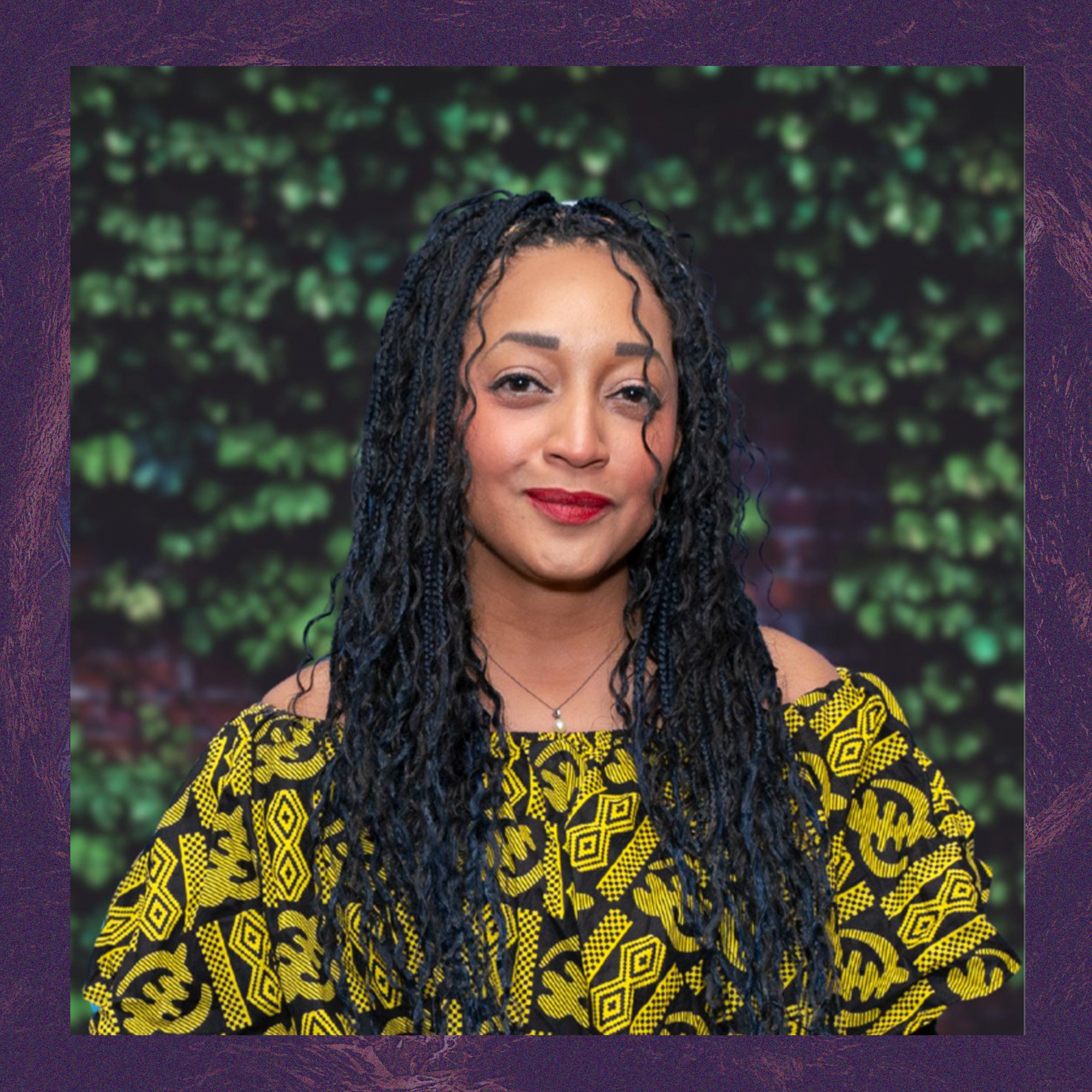
Minister Ciara Taylor is an educator, artist, and movement strategist shaped by prophetic traditions that arise wherever people in struggle remember themselves and refuse erasure. Her work lives at the crossroads of culture, faith, and liberation, grounded in the belief that ending poverty requires developing and uniting leaders of the poor and dispossessed across lines of historic division. Guided by the conviction that movements need more than ideology alone—that they require song, ritual, memory, and moral courage as a part of our strategy—she draws from Black freedom movements, interfaith justice lineages, and grassroots organizing to help communities tell the truth about power and practice the world they are organizing to bring into being.
She serves as Director of Culture, Faith, and Organizing at the Kairos Center for Religions, Rights, and Social Justice, where she works alongside organizers, artists, and faith leaders to unsettle stories that bless violence and inequality. There, she tends the spiritual and cultural life of movements—crafting curriculum, shaping ritual, and strengthening faith-rooted networks confronting racism, poverty, ecological devastation, militarism, and religious nationalism.
Ciara is a founding member and cultural organizer with Songs in the Key of Resistance (SKOR), a movement song collective that carries the music of struggle across generations—as inheritance, medicine, and invitation. She is also a movement minister with the Freedom Church of the Poor, a spiritual home without walls where people in struggle author their own prayers, shape their own rituals, and claim their lives as sacred testimony—good news to the poor and a living vision of the Beloved Community on earth.
Her notable projects include “Songs in the Key of Resistance: A Movement Songbook”, “We Do Not Move Alone: Songs, Chants, Poems, Prayers, and Artwork to be Used in the Call for Ceasefire on Gaza and a Free Palestine”, “Power in the Air”, and as a contributor to We Pray Freedom: Liturgies and Rituals from the Freedom Church of the Poor (2025). Across this work, Ciara wields song, prayer, history, visual art, and poetry as technologies of resistance—ways to grieve what has been taken, remember what has been taught, and organize what must be transformed.
Her political formation began as a high school student organizing against the Iraq War and deepened through the co-founding of the Dream Defenders in 2012. As Political Director and later Director of Political Consciousness, she helped shape an organizing tradition rooted in moral clarity, historical memory, and disciplined love. Her work—and the origins of the Dream Defenders—are featured in HBO’s Eyes on the Prize III: We Who Believe in Freedom (Episode 6, What Comes After Hope? 2008–2015).
Guided by the belief that liberation is both a moral demand and a collective practice, Ciara works with movements to remember what they know, raise their voices in song and ritual to break isolation, and organize as if another world is not only possible—but calling us into being together.

Unbound Social