
Isaiah 52:13-53:12; Psalm 22; Hebrews 10:16-25 or Hebrews 4:14-16; 5:7-9; John 18:1-19:42
*Content Warning- this piece contains descriptions of racial and police violence. Please take care of yourself. *
Dystopian Novels, Memory, and Sin
John 18:1-19:42
The best book I read this year was Chain Gang All Stars by Nana Kawme Adjei-Brenyah. This dystopian, Hunger Games-eque novel was written as a critique of the American prison system. I found it so compelling because the storyline felt so close and so far away all at once.
The novel takes up themes of torture, sin, innocence, and harming our neighbors (sometimes inadvertently). When we read Chain Gang All Stars, we hear the echoes of our current prison system in America. In this subtext, Aedjei-Brenyah invites us to think beyond our carceral reality through the power of imaginative fantasy. Great literature helps us step outside of our current time and place to see our reality more clearly, and it opens us up to how our world could be.
While reading this novel, I could not help but be reminded of another story about torture, sin, innocence, and the harming of our neighbors: Good Friday.
Let’s walk through the text together, beginning at John 18.
“Judas led the way to the garden, and the Roman soldiers and police sent by the high priests and Pharisees followed. They arrived there with lanterns and torches and swords. Jesus, knowing by now everything that was imploding on him, went out and met them. He said, ‘Who are you after?’ They answered, ‘Jesus the Nazarene.’ He said, ‘That’s me.’ The soldiers recoiled, totally taken aback. Judas, his betrayer, stood out like a sore thumb. Annas interrogated Jesus regarding his disciples and his teaching. Jesus answered, ‘I’ve spoken openly in public. I’ve taught regularly in meeting places and the Temple, where the Jews all come together. Everything has been out in the open. I’ve said nothing in secret. So why are you treating me like a traitor? Question those who have been listening to me. They know well what I have said. My teachings have all been aboveboard.’ When he said this, one of the policemen standing there slapped Jesus across the face, saying, ‘How dare you speak to the Chief Priest like that!’ 1
The last interaction feels dystopian, doesn’t it? Illegal. Disgusting. An authority figure harming an innocent man for the way he chooses to speak to another authority figure. We couldn’t imagine that happening today.
But it does. On September 9, 2024, this happened in our country. A police officer was supposed to be taking the fingerprints of a man who had been detained. He was caught on video assaulting this detainee in the city lockup, repeatedly punching him with a closed fist, yelling expletives and, according to federal prosecutors, challenging the victim to “Say something else!” Say something else!”2
Lord have mercy, Christ have mercy.
After Jesus is slapped, Pilate enters the scene. After much back and forth with the crowd3, “Pilate took Jesus and had him flogged.”4 Flogged- as in to beat someone with a whip or stick as punishment or torture. Again, this is dystopian, unreal. It should be unimaginable in today’s circumstances.
Except it’s not. In 2021, a police officer used excessive and unreasonable force in the arrest of Kyle Vinson, pointing his gun at his head, repeatedly hitting the man in the head with a gun and strangling him for 39 seconds.5
Lord have mercy, Christ have mercy.
After Jesus was flogged, “The soldiers wove a crown of thorns and put it on his head, and they dressed him in a purple robe. They kept coming up to him, saying, ‘Hail, King of the Jews!’ and striking him on the face.” 6
In other words, they mocked him. They threw a purple robe on him as it represented royalty and offered him a “crown” for the same reason. Dystopian. Unreal. Unimaginable.
Except, in 2025, videos were found of jail guards mocking an intellectually disabled inmate. The same man guards had filmed days earlier being shocked in an electrified vest after he asked for a Coke. 7
Lord have mercy, Christ have mercy.
After more back and forth between Pilate and the crowd, the crucifixion begins. “They crucified him and with him two others, one on either side, with Jesus between them.” 8 A painful and horrible death no one should ever have had to endure.
Dystopian. Disgusting. Unimaginable.
Except- One of the last lynchings in America (supposedly) was the lynching of Michael Donald on March 21, 1981. Less than 50 years ago. Several Ku Klux Klan members beat and killed Michael Donald, a 19-year-old, and hung his body from a tree.9
Lord have mercy, Christ have Mercy, Lord have mercy.
You and I both know how the story ends, but today we sit in the horror of this dystopian story, where our God hangs on a cross.
Growing up, when I first encountered the story of Good Friday, or any other dystopian story—like Chain Gang All Stars, the Hunger Games, or The Handmaid’s Tale—it felt far away. But having the opportunity to step beyond my privilege to get a closer look at reality, the less far away these stories seem. So often, if we look closely enough, dystopian stories act as a mirror to the underbelly of our current reality.
If we told our current reality to someone in the distant future, the American prison system might sound like a dystopian novel too. Innocent men are sentenced to death by their community today, and they will be sentenced to death tomorrow. This story is not far away. It is right here. And it is, unfortunately, our story.
The philosopher Walter Benjamin wrote, “The work of memory collapses time.” For Benjamin, memory is not about the past calmly returning to the present in a smooth timeline. We don’t merely reflect as subjects on the past as an object. Memories of the hardest, toughest, most profound things, like the violent death of a God we love, interrupt our present and can change our future.
This Good Friday, I am spending time in prayer and confession, noting my own role in the way I allow this story to live on today. May you spend time today doing the same. May the violent death of our God bring you to refuse the erasure of the stories of those in our prison system today.
Amen.
1 This comes from The Message version of the Bible. Many people have a variety of opinions about The Message, and I am usually an NRSVUE fan, but The Message worked well here. Moving forward, all other translations will be from the NRSVUE.
2 https://www.freep.com/story/news/local/michigan/macomb/2024/09/09/warren-police-officer-matthew-rodriguez-assault/74782929007/?gnt-cfr=1&gca-cat=p&gca-uir=true&gca-epti=z113624d00-v113624d–40–b–40–&gca-ft=225&gca-ds=sophi
3 John’s gospel is ripe for Judeophobia- particularly this chapter. Judeophobia is defined as a generalized dislike of Jews in a given population. Englund, Steven, ‘Antisemitism, Judeophobia, and the Republic’, in Edward Ducler Berenson, Vincent Duclert, and Christophe Prochasson (eds), The French Republic: History, Values, Debates (Ithaca, NY, 2011; online edn, Cornell Scholarship Online, 18 Aug. 2016),
4 John 19:1, NRSVUE
5 https://sentinelcolorado.com/metro/aurora-cop-who-beat-black-man-with-a-pistol-goes-on-trial-today/
6 John 19:2-3, NRSVUE
7 https://mississippitoday.org/2025/11/19/rankin-county-jail-guards-mock-intellectually-disabled-inmate/
8 John 19:18, NRSVUE
9 https://en.wikipedia.org/wiki/Lynching_of_Michael_Donald
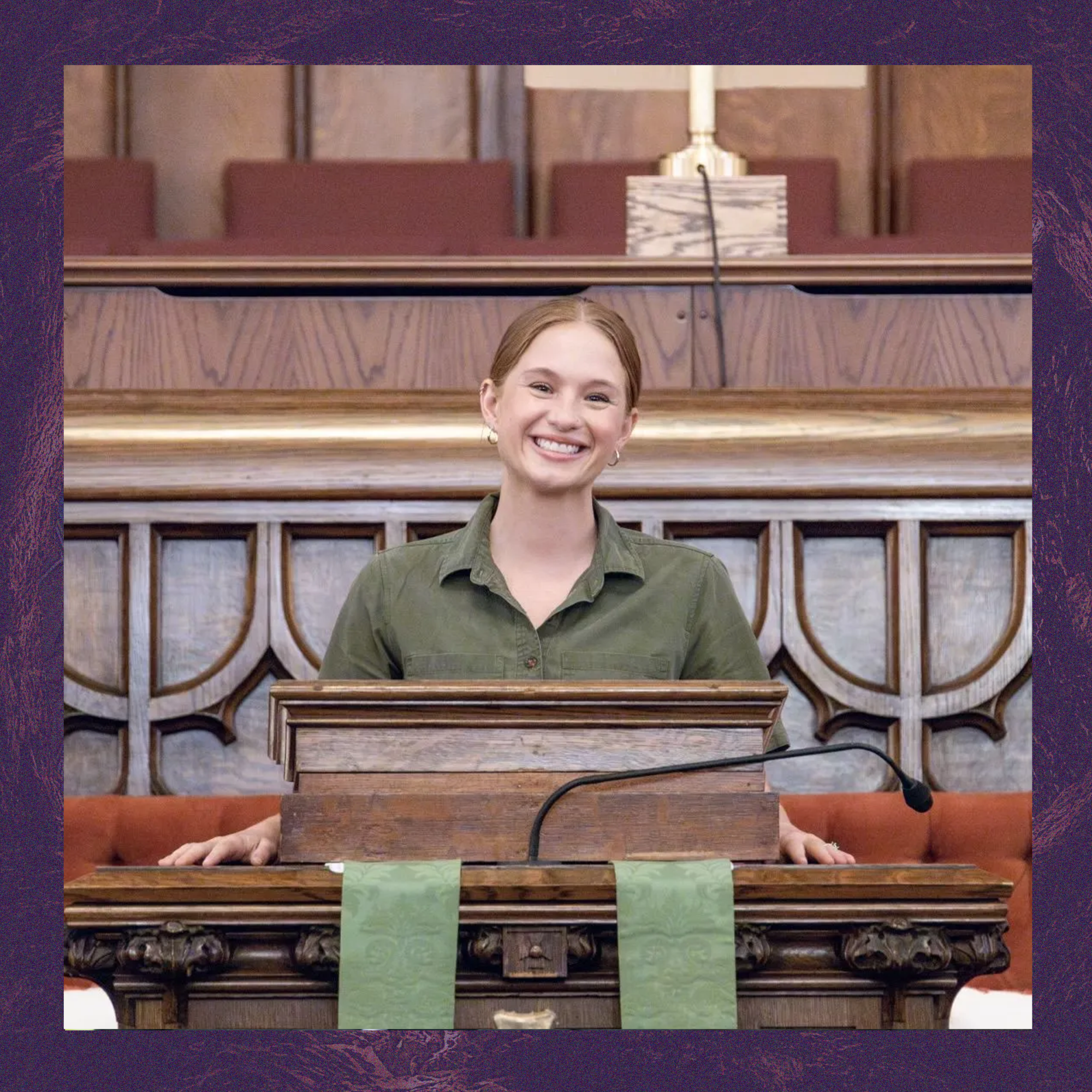
Rev. Emily Knoth is a PCUSA pastor in Wichita, KS. She lives with her wife, Rev. Maddy Bishop-Knoth, and their two dogs, Wrigley and Rufus. Her work and writing focus on the Holy Spirit, gender, and motherhood.

Unbound Social