

34 Then Peter began to speak to them: “I truly understand that God shows no partiality, 35 but in every people anyone who fears him and practices righteousnessis acceptable to him. – Acts 10:34-35
Acts 10 represents the moment where Peter, a man bound by tradition and cultural boundaries, stands in the house of Cornelius, a Roman centurion and an agent of the occupying empire. Everything within Peter compelled Peter to not be there for as a Jew he was forbidden to enter the home of a gentile. Peter’s words are revealing, “You yourselves know how unlawful it is for a Jew to associate with or to visit anyone of another nation, but God has shown me that I should not call any person common or unclean.”
This is a turning point in his life and the resulting impact upon religion is to challenge religious and ethnic prejudice. Peter expressed a view that was not mainstream or popular. It was previously believed that God appeared to the powerful, wealthy, and religiously pious. The new revelation is that God is revealed to those considered unworthy, lowly, even sinful. Peter learns that no one is beyond God’s extension of grace. None are exempt from God’s movements for justice and transformation. He states a revolutionary discernment: “I now realize how true it is that God does not show favoritism” (v. 34).
The tragedy is that God had revealed this message through Jesus in the presence of Peter beforehand. Jesus constantly broke the religious and social taboos in his life and ministry. Tax collectors were despised and unclean. One of his first disciples was a tax collector and he ate in the home of Zacchaeus. He associated with women, which Paul missed when he urged women to remain silent in church. The list of female followers is long: Mary Magdalene, the sisters Martha and Mary, Joanna, Susanna, “and many others” (Luke 8:3).
In order to be faithful to God, each one of us must confront our own “clean vs. unclean” judgment of others. God treats and approves of everyone equally without regard to citizenship, race, societal status, wealth, or perceived power. God is interested in the qualities within one’s heart including faith, compassion, and a passion for justice.
The season of Easter represents the human quest for dignity, justice, and faith. The resurrection of Jesus represents an end to the appeal of worldly injustice and partiality. From a perspective of practical theology, the Resurrection is not just a future hope; it is the validation of Jesus’ earthly ministry fulfilled through activism and direct involvement in the lives of the poor and those spiritually oppressed. Jesus didn’t just preach abstract peace, he addressed the “powers and principalities” of the world. Powers manifested in economic exploitation, social exclusion, and political oppression. Therefore, our work for justice isn’t a distraction from the Gospel; it is the Gospel in motion. To follow the Risen Christ is to go around doing good, specifically targeting the systems that keep people under oppression that undermine their ability to achieve in life.
We are in the midst of a seismic shift in American society through the outright animosity towards refugees, immigrants, and those who have migrated to our shores. While not new, its modern version reflects the vehemence of the past and is quite shocking to many. Immigrants are treated as the modern version of “unclean.” They are rounded up like cattle and deported at a rate of 1,200 a day. Parents are kidnapped from work, school, while walking down the street with no notification to families as to what has happened to them. Children are terrorized to the point that they are emotionally scarred by the domestic trauma being experienced. ICE has the authorization to invade homes and places of work and has been involved in the deaths of American citizens daring to protest.
Not only are individuals unclean, but nations are also denigrated by an administration that takes delight in imperialism. The United States has commandeered the right to invade other countries and take what it wants with not even the resemblance of righteousness or lawfulness. It is manifesting a “might makes right” manifesto that disregards international law and norms. It adheres to an “us vs. them” binary where you are either with us or against us. Actions are justified as being in the interest of the nation based on superficial and insufficient justifications and an arrogant, dictatorial approach to foreign policy. Threats to take Greenland, invade Cuba, and bomb Iran, are frightening and no longer considered just bombastic rhetoric.
All of this is contrary to the essence of what it means to be a country that professes to be a Christian nation and a land governed by Christian principles. It is plainly evident that our actions of inhospitality represent those of a nation in spiritual and psychological disarray as our actions do not match our democratic proclamations.
Christians must resist the influence of such things and declare that these notions are contrary to our faith. Our enemies are not those declared by politicians and billionaires who operate from selfish motives of power and greed. We affirm the right of others to determine for themselves what is in their best interest and the path they will tread. We declare that we are children of a God who is impartial and does not judge based on nationality, race, sexual identity, gender, or any of the hateful prejudices humans create.
Claudette Colvin died in January of 2026. She is overshadowed by her more famous peer, Rosa Parks. But they share the same courage of refusing to relinquish their seats to a white person despite living in Jim Crow Alabama. Fifteen-year-old Claudette was arrested in Montgomery, Alabama on March 2, 1955, nine months before Ms. Parks. Her charges included disturbing the peace and violating segregation laws. After their arrests, both women were considered by the NAACP to be plaintiffs in a test case to end racial discrimination. But after sharing her pregnancy, civil rights leaders chose Rosa Parks as the face of the Montgomery Bus Boycott. Lighter skinned Parks was seen as more appealing, while Colvin was considered “feisty” and “mouthy.” Leaders shared their opinions that she was not a “respectable” symbol for the movement. Martin Luther King III noted that Colvin’s dark skin was a factor. Despite being sidelined, Colvin was a key plaintiff in Browder v. Gayle, the case that successfully challenged the legality of bus segregation. She famously commented of her decision to remain seated, “History had me glued to the seat. It felt as if Harriet Tubman’s hand was pushing me down on the one shoulder, and Sojourner Truth’s hand was pushing me down on the other. Learning about those two women gave me the courage to remain seated that day.”
Ms. Colvin’s courage shows that we serve an impartial God who uses those rejected by worldly standards, yet who are remarkable and can play a role in God’s mission. Each day is a reminder that anyone can make momentous decisions that impact each one of us. There is no criteria for being faithful or to take actions that put our faith into action.
The most powerful form of activism is embodied presence. Change rarely comes from those considered to be at the top of the social hierarchy. It often comes from those who have a passion for what is right and a desire to be treated justly. And who desire it for all.
Reflection
The Resurrection proves that death, and the systems that deal in death, do not have the final word. If the grave could not hold the “One who went about doing good,” then our efforts to bring healing to our communities are never in vain. Where others see only a tomb of death, people of faith see the power of God to bring life and restoration. While the original gaze upon the cross saw it as an instrument of persecution, Christians see the hope of the manifested presence of God to endure suffering on our behalf.
Prayer: Risen Lord, strip away any favoritism found within me. Please give me the courage of Peter to enter houses I’ve been taught to avoid. May I possess the heart of Jesus to confront all powers that oppress anyone wherever they may be found. Give me the courage that can only be found in love to confront all who seek to oppress and exploit the vulnerable. May my activism be a witness to Your life. In the name of Jesus of Nazareth. Amen.
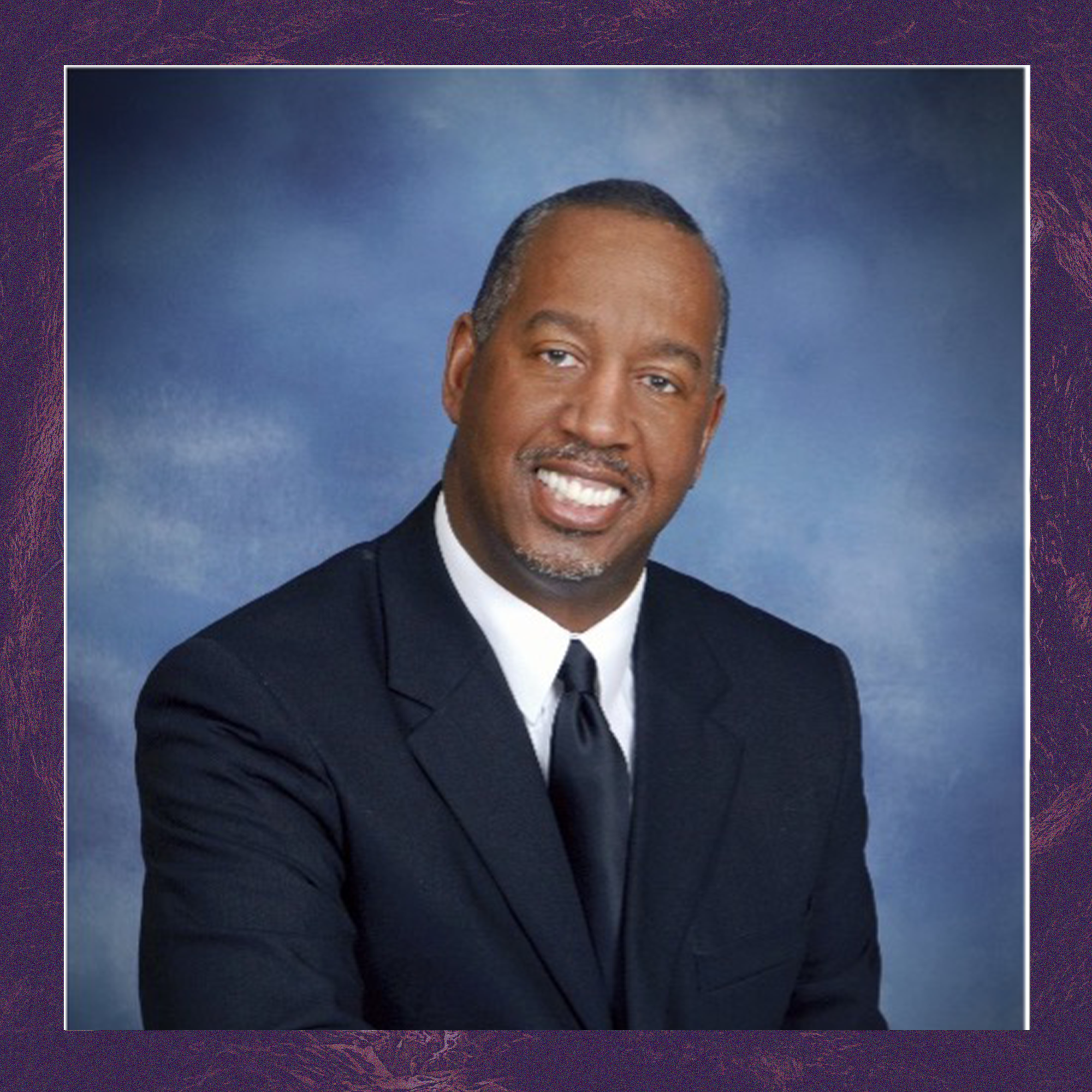
Rev. Jimmie Ray Hawkins serves as Mission Director of the five advocacy offices of the Presbyterian Church (USA): Washington Office of Public Witness, the Presbyterian Ministry at the United Nations (NYC), Immigration and Advocacy, Mission Responsibility Through Investigations, and race and Gender Justice.
He earned a Bachelor of Arts in Social Studies from North Carolina Central University (Durham, NC); a Master of Arts in Christian Education from the Presbyterian School of Christian Education (Richmond, VA); and a Master of Divinity from the Interdenominational Theological Center/Johnson C. Smith Theological Seminary (Atlanta, GA).
For twenty years he served as the pastor of Covenant Presbyterian Church in Durham, NC, 1996 – 2016. Between 1992 – 1996, he served as the senior pastor of Grace Presbyterian, Holmes Memorial and Trinity Presbyterian churches in Virginia (Peaks Presbytery).
He served on the boards of Church World Service, the National Council of Churches and Union Presbyterian Seminary. He has chaired several interfaith /ecumenical and non-profit boards: NC NAACP Executive Committee, Durham Congregations in Action, the Interdenominational Ministerial Alliance, the Religious Coalition for a Non-Violent Durham, Housing for New Hope (homeless advocacy), End Poverty Now, and others. He served as a tri-chair for the Washington Interfaith Staff Committee (WISC) and the Heads of Washington Office (HOWO). Serving the church, he has traveled to Haiti, Cuba, and Israel/Palestine.
His community ministry includes being a leader for the Moral Monday Movement since its onset in 2013, as well as with the Poor People’s Campaign since 2017. He has engaged in four acts of civil disobedience protesting voter suppression, lack of healthcare and for a living wage.
He is the author of two books, Unbroken and Unbowed (2022) and The Shaping of Black Identities (2025), both published by Westminster John Knox Press.
He is the son of the late Elsie L. and James P. Hawkins. He is married to Sheinita Hampton Hawkins, and they have two children: Kaela Renee and James Hampton.

Unbound Social