
If you know me, you know that I love Broadway and musical theatre. Earlier this year, I had the opportunity to see Tina Turner the Musical. I had a fabulous time singing, dancing, and learning about Tina Turner’s life and experiences through her discography. As you may know, the Queen of Rock and Roll’s life was one full of trauma and turmoil. I learned things I had never fully grasped about her experiences with abuse, domestic violence, and grief. The musical also reflected her glamour, fashion, and spunky personality. The performers did a great job of telling her story with an openness that included both her joys and sorrows. I was also humbled by the ways music supported her in finding strength through her pain and sorrow. There was this moment in the first half of the show when she finally gains the strength to leave her abusive husband, and the actress playing Tina Turner breaks out into the hit 1993 song “I Don’t Wanna Fight.” It was a massively empowering moment that made the audience feel every moment between heartbreak, exhaustion, and, finally, courage and resolve.
There was another scene later on when Tina’s mom dies and she comforts her sister with the song “We Don’t Need Another Hero.” It is a heartbreaking scene that captures the complexity of losing someone who has also hurt you deeply. Each musical moment added new texture to what we know about Tina Turner and the pain she must have been carrying throughout her career. I was just amazed and breathless. I realized how much her music and self-expression were part of what helped her survive and find purpose in the midst of difficult circumstances.
My own love of the arts began when I was very young. Elementary school was when I started writing. I began by journaling about my personal experiences, but then I also started writing my own fiction stories. Throughout those years, I enjoyed arts and crafts and playing with painting and drawing as well. In my teen years, I began singing in school and church, and then finally took on acting and musical theatre. In my early years, art became a way for me to process the difficult experiences I was having. It gave me the opportunity to express pain, confusion, and joy in a safe way. It also allowed me the chance to make sense of what was happening to me.
My people have a deep historical connection to creativity and the arts as a way of expressing grief and lament. I am always humbled when I think about the ways the spirituals were birthed out of such deep woundedness. Sounds like the drum and the moans that accompanied songs helped people steady themselves and find hope in impossible circumstances. The spirituals created brief moments of escape from the horrors of slavery. They also became ways to resist those horrors. Enslaved people would often “steal away” when their enslavers weren’t looking and sing their own sorrows and hopes. The songs would be encoded with their hopes of freedom. It would sound like they were talking about heaven sometimes, but sometimes they were talking about escape. Later on, the blues also became a way of using songs to talk about everyday life, wrestling with racism, difficult work conditions, and relationship struggles. As history went on, the tradition continued with songs like Mahalia Jackson’s “We Shall Overcome” and Kendrick Lamar’s “We Gon’ Be Alright,” which accompanied protest movements. In all these ways, the arts helped us get through what we were going through. They gave us hope for a new world.
Sometimes the arts help us communicate difficult realities. They help us express what hurts and what we want to strive for instead. Having an outlet for our pain keeps it from getting stuck in our bodies and our minds. The arts are here to help us express what is unspeakable, taboo, and complex. This week, find some artistic mode of expression for your grief and lament.
Here are some ideas:
- Draw or paint a picture of what hurts or what you long for.
- Write in a journal about what you are experiencing.
- Create a story, poem, or spoken-word piece.
- Listen to or create a song that resonates with you.
- Dance or move your body in some way.
- Cook a new recipe.
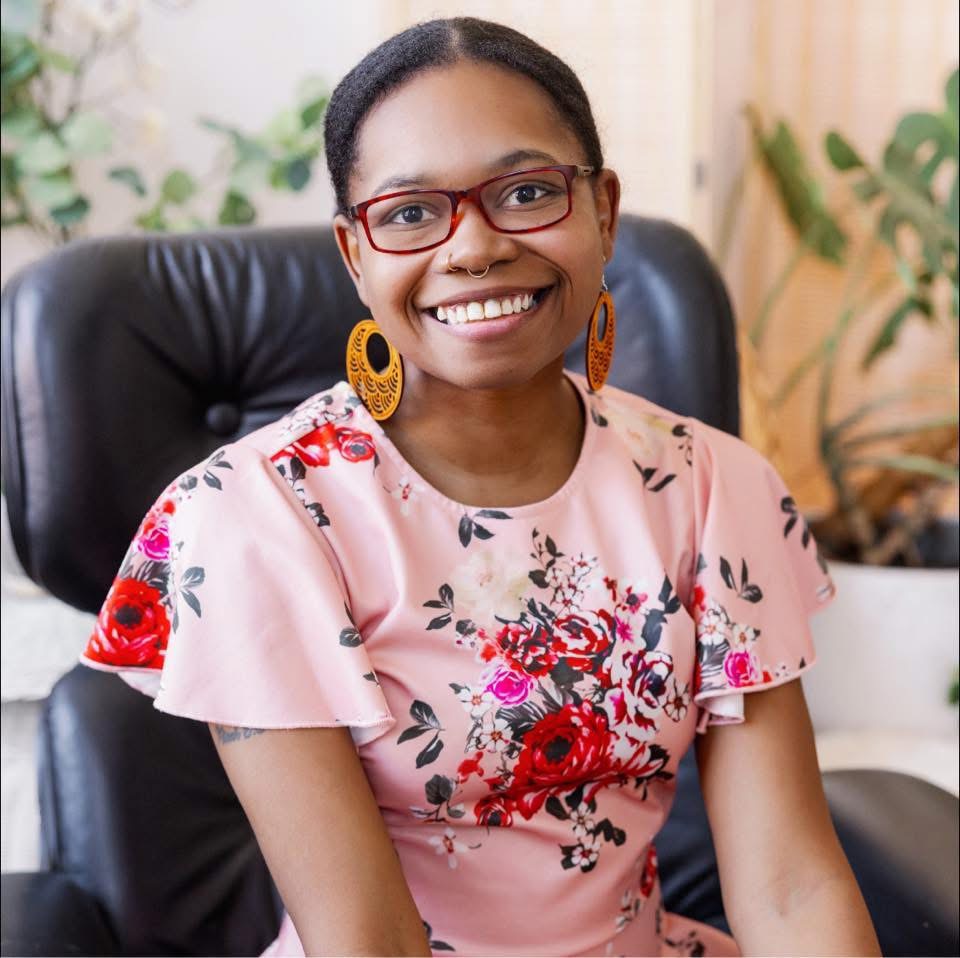
Rev. Brooke Scott is a queer faith leader who is passionate about inclusive, justice-oriented ministry. She is also a licensed social worker (LSW) and part-time therapist. Along with mental health, she has experience in case and crisis management.
She has a Master of Social Work (MSW) from the University of North Carolina at Chapel Hill, a Master of Divinity (M.Div) from Duke University, and a Bachelor of Social Work from Eastern University. Pastor Brooke currently lives in Philadelphia with her partner. While not in church or in therapy sessions, she is an avid reader and a big fan of music, podcasts, and musical theater.

Unbound Social