
I write this op-ed as the Co-Founder of Bioearth, home of the One Billion for Peace pledge, which defines sustainable peace as entailing “the physical, material, psychological, cultural/religious, and ecological wellbeing of all peoples” (www.bioearth.org). In 2023, the Presbyterian Church USA (the denomination in which Unbound is housed) became a leading signatory of the pledge, joining Buddhist, Catholic, Jewish, Muslim, neo-Pagan, and other Protestant faith organizations and individuals on six continents committed to pursuing this goal of sustainable peace.
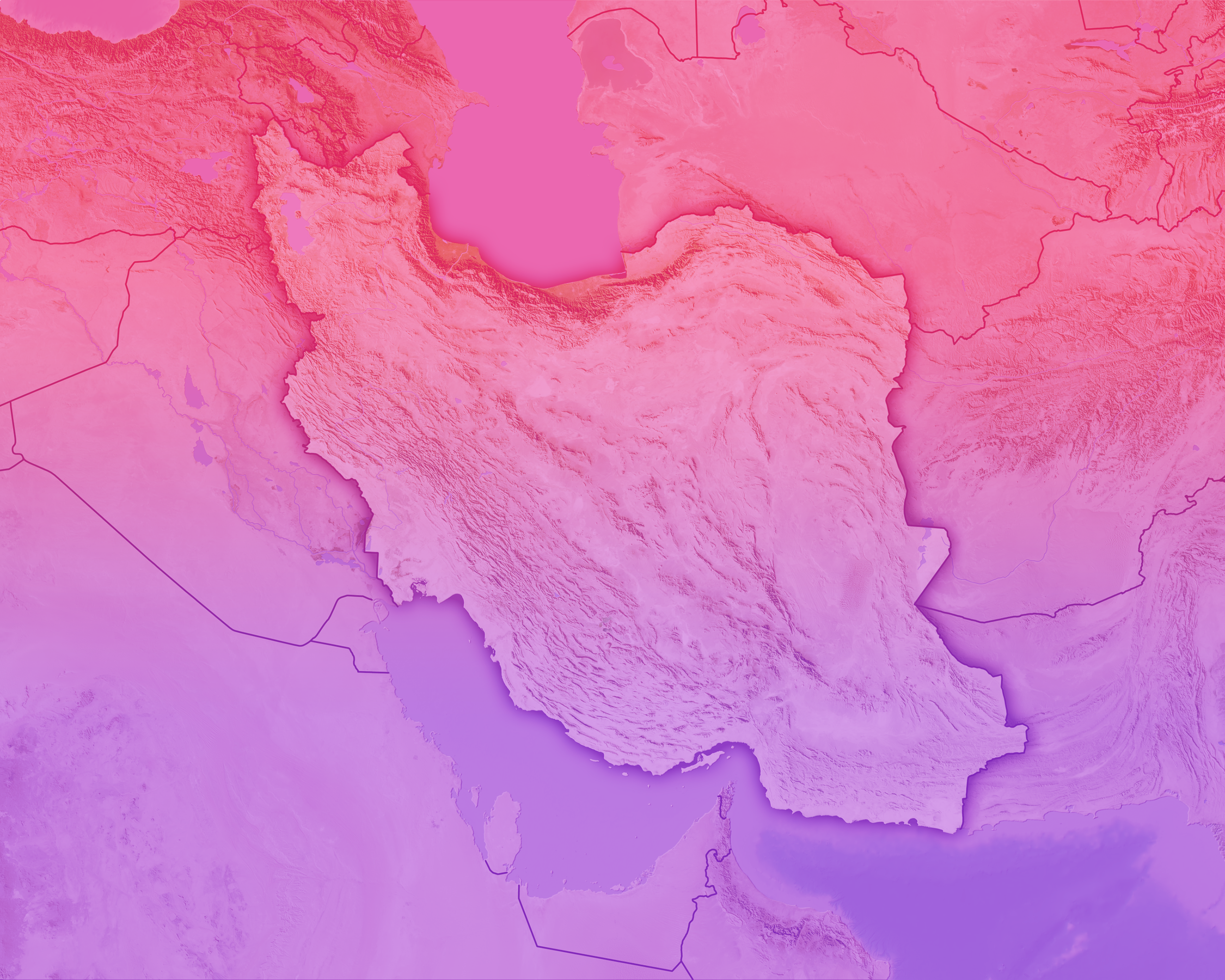
As a co-leader of this global movement, the macro-view afforded by the sustainable peace framework leads me to be deeply concerned about the United States’ conflict with Iran, which by any commonsense definition deserves the title “war” (even though there was no opportunity for the US Congress to declare a war). I am profoundly worried because all wars – such as the war with Venezuela on January 3, 2026 – harm the five dimensions of wellbeing necessary for sustainable peace. The ensuing violence inevitably harms innocent lives (physical wellbeing), destroys critical infrastructure and impacts access to food, water, and medicine (material wellbeing), creates fear, hatred, and long-lasting trauma in populations (psychological wellbeing), and wreaks devastation on the environment (ecological wellbeing). This last point is critical: all wars derail us from what must be our ultimate priority of securing a “livable future” for most of humankind on the planet by reducing greenhouse gas emissions to net zero in less than twenty-five years (IPCC AR6). That is, at a time when the survivability and quality of life for most people on the planet is gravely at risk and we should be coming together to cooperate as never before in our history, we simply cannot afford to be fighting one another in wars. And in this war, bombed oil fields and tankers are filling the skies and waters with thick, enduring pollutants.
Although all wars impact these dimensions of wellbeing, my academic expertise leads me to conclude that this particular war in Iran takes a wrecking ball to “cultural/religious wellbeing . . . for all peoples.” As a religious studies scholar-teacher who specializes in apocalyptic thought and movements, I have researched and taught about a wide variety of apocalyptic terror groups and other forms of violent extremism, which I discuss in Understanding Apocalyptic Terrorism: Countering the Radical Mindset (Routledge, 2016). I also co-taught a course on Simulation of Outcomes of the Iranian Nuclear Program for the University of Virginia and James Madison University with a retired senior intelligence analyst, and the two of us collaborated with a systems dynamics expert to publish on radical apocalypticism in Iran. For over fifteen years, I have shared this research on radical apocalypticism with decision makers and intelligence analysts from five allied nations, including the US.
Given this background, on February 28, 2026, when I heard that the United States had killed the Supreme Leader of Iran, the Ayatollah Ali Khamenei, I said to my friend, “I literally cannot think of a single thing we could have done that would be worse for world peace than this.”
I know all the arguments in favor of killing the former Supreme Leader. I fully understand that under Khamenei’s leadership, Iran has engaged in state-sponsored terrorism (including training the Hamas militants responsible for the Oct. 8, 2023, attacks on Israelis) and the brutal murder in 2025-2026 of tens of thousands of Iranian protestors. I am also relatively well informed about how perilously close Iran had come to creating nuclear weapons in a program that accelerated after the United States unilaterally withdrew in 2018 from the Iranian nuclear deal, known as the Joint Comprehensive Plan of Action (JCPOA), supported by the UN Security Council.
However, I also understand, better than most, the dynamics that are involved when official decision makers in governments subscribe to radical apocalyptic beliefs that replace standard national security decisions as well as widely shared humanitarian conventions. I have written extensively about these radical elements infiltrating both the governments of the Republic of Iran and of the United States. The rest of this lengthy op ed and plea for peace comes out of this perspective.
To sum up my analysis, this is a quagmire of a war that will reverberate for years to come, long after the US declares an end to the present conflict. It has the potential to turn into the worst-case scenario – WWIII – if radical apocalyptic believers in the US, Iran, and Israel remain empowered as primary decision makers. On the US side, Christian nationalist apocalyptic believers in top US decision making posts have apparently convinced President Trump to engage in an unwinnable conflict based not on traditional intelligence, but rather on their confidence derived from fringe apocalyptic interpretations of the Book of Revelation. News media have already confirmed that several US Generals explicitly tried to bolster military troop morale by framing the US’ attack as a precursor to Armageddon. On the Iranian side, the killing of the former Supreme Leader, an 86-year-old man whose prostate cancer had probably metastasized, dealt a death blow to all moderates in the Iranian government, while empowering the most radical apocalyptic decision makers, including some in the Assembly of Experts and in the IRGC, the spiritual army that operates alongside the regular military army. In the context of Twelver Shi’a Islam, the state religion of Iran, the Supreme Leader is the representative of the infallible Hidden Twelfth Imam and the Prophet Muhammad, and thus the supreme spiritual figure until the return of their end time deliverer, the Mahdi. For the radical apocalyptic believers who have just been empowered further, his murder signals the imminent return of Jesus and the Mahdi in the final cosmic battles that will see Shi’a Islam triumph over its enemies, including the Sunni nations and the Great and Little Satan, the US and Israel. In this scenario, Iran might even be wiped out with conventional military strikes, but it will prevail in a cosmic end time. In Israel, radical apocalyptic Zionists believe they are reclaiming biblical lands that God gave to them and expanding the kingdom for the arrival of the Messiah. What is clear in every case is that threats, mockery, or physical attacks on radical apocalyptic believers only strengthen their resolve by confirming that “the other” is Evil.
Put simply, radical apocalypticism does not operate by longstanding norms of national security or intelligence analysis, and it does not abide by humanitarian conventions. Radical apocalypticism – whether in Iran or in the US – operates by its own internally reinforcing logic, in which suffering and deaths (even of innocents) on “the other side” are justified as the battle to defeat Evil, and deaths (even of innocents) on “our righteous side” feed martyrology and strengthen the conviction that God will soon intervene with divine deliverers to deliver us from evil, at least when enough deaths mount. The conflict this month has unleashed a dynamic of twinning, dueling radical apocalyptic worldviews, in which radical apocalyptic decision makers on each side amplify radical apocalypticism on the other side in an escalating spiral of destruction.
Unless the religious authorities in Christianity, Islam, and Judaism stand up against radical apocalypticism, and unless the moderates in each government remove the decision-making power of the radical apocalypticists, escalations will spiral out from this war on many fronts. Specifically, Israeli and American attacks on civilian targets (which has occurred with the bombing of the Shajareh Tayyebeh girls’ school that killed around 175 persons, including 100 children) will be cast as unintentional collateral damage by Israel and the US, but will feed the Shi’ite concept of martyrdom and solidify Iranian commitment to exacting revenge. Iran’s attack on Gulf states and the Strait of Hormuz will create an imminent energy crisis and worldwide economic crisis, which will impact poorer countries most severely and invite even more destruction on the Iranian people, which apocalyptic hardliners in Shi’a Islam will interpret as end time martyrdom, fueling their commitment to fight the US and Israel, as well as their Sunni enemies. The inevitable damage to the environment that munitions and warfare will cause will be dismissed as a necessary step to bringing about Paradise in the end time. Iranian sponsored terrorism against the US, Israel, and our allies will ensue, including cyberattacks, creative attacks to spread psychological terror, and possibly attacks with unsecured fissile materials. Such terrorism will trigger disproportionate responses, and the widening regional political entanglements and global dynamics could well bring about WWIII. Again, this can be stopped, but only if the religious authorities in all religions stand up against radical apocalypticism, and the moderates in each government remove the decision-making power of the radical apocalypticists.
There has never been a more urgent time to commit to sustainable peace and to speak up as believers in the Bible (which includes Christians, Jews, and Muslims alike) to contest the misinterpretations of radical apocalyptic believers. Apocalyptic biblical texts such as Daniel and the Book of Revelation call on the righteous to wait pacifistically until divine help arrives. They are clear that there is no such thing as end time “Holy Wars,” except for those fought by the angels. For Christians, Revelation 13:10 states that “He who leads into captivity shall go into captivity and he who kills by the sword will die by the sword.” Christians must squarely recognize and reject the radical apocalyptic agenda no matter how it cloaks itself, especially when it steers national policy and threatens humankind’s ability to secure a livable future. The only silver lining I see, which does not outweigh the downsides, is that the soaring price of oil and gas might be a wakeup call alerting us to our energy dependence on fossil fuels. We must see the integral connections between environmental protection and peacebuilding, and thus I invite you to become an individual signatory of the One Billion for Peace pledge and to share it with others (www.bioearth.org), and to call your political leaders to assert that radical apocalypticism is not representative of your faith.

Frances Flannery Ph.D., M.A., B.S. is a teacher, scholar and activist. Frances is also the co-founder of BioEarth, a non-profit that faces the climate crisis by actively waging peace. Sign the One Billion for Peace Pledge and join the growing One Billion for Peace Movement, a global climate action and sustainable peace coalition comprised of signatories on six continents representing more than 1.2 million people.



Unbound Social