
Isaiah 61:10-62:3 ~ Psalm 148 ~ Galatians 4:4-7 ~ Luke 2:22-40
On a sweltering, high-humidity June day on the Eastern Shore of Maryland, my now-husband and I threw a Christian summer camp-themed wedding we proudly and campily combined our names to call Camp Shoneill!
We extended an open invitation to everyone we knew – “If you want to come, we want you there – we just ask that you bring some food to share.” And our campers indeed came from far and wide – crossing the Delmarva Peninsula from my home state of Delaware, road-tripping from his home state of Michigan, and flying from places like Texas, Oregon, and even Vancouver. People we knew well and saw regularly mingled with internet friends we were meeting IRL for the first time. It was truly magical.
Our campers sweat it out with us as we danced, crafted postcards with Polaroid printouts, and played the kind of camp games that put my cousin on a team with my husband’s friends from his days in a home school co-op. That kind of fun, silliness, and love surrounded us as we stood in front of picnic tables, completely drenching our sky-blue suits with sweat. It was there that we proclaimed those beautiful words, “In sickness and in health, I do.”
In many ways, our Camp Shoneill wedding came at just the right time. It wasn’t just a summer day, but a “summer season” for us. After five moves in two years, we were finally settled in our new life together. I had recently been ordained and had been serving my congregation for long enough that my beloved church folks filled the dessert table past capacity. My husband had been in seminary for long enough that classmates put down their books to join us in celebration. And even the hot summer day was a miraculously sunny break in a long stretch of storms, which sent another Severe Thunderstorm alert to our phones just after we packed up the last of our camp supplies the following day. Camp Shoneill came at just the right time.
Yet, at the same time, the time wasn’t right at all. Unfortunately, several months before our high-energy Camp Shoneill wedding, my husband had what we originally thought to be a mild Covid infection that gradually disabled him. Our wedding day was exhausting for us both, but it was even more challenging for him. The months since our wedding have been largely shaped by Long Covid – trying countless treatments, recording data in spreadsheets to make sense of it all, explaining to doctors each new symptom, and navigating life while bedbound. We are newlyweds, and we are exhausted. As I reflect back on it, a celebratory day at Camp Shoneill just doesn’t seem to fit the middle of the crisis we have experienced.
That it was simultaneously the right and the wrong time for a wedding has plenty of precedent. Charles Dickens points towards this in his iconic opening line, “It was the best of times, it was the worst of times.” So many of us know what those polarities feel like when they crash together, especially during the Christmas season when grief mingles with Christmas carols and children’s pageants. Maybe the bad doesn’t necessarily override all the good, but it certainly complicates it. It reminds me of Kahlil Gibran poetically describing us as being suspended between joy and sorrow. Life often – maybe always – contains both. This duality appears even in today’s Gospel passage as Mary, Joseph Simeon, and Anna each experience unexpected joy in the middle of ongoing sociopolitical and personal challenges.
As the author of Luke situates the rituals for Mary’s purification and Jesus’ dedication in the temple, he references the Exodus passages for dedicating the “firstborn male.” Verse 23 is easy to skip, especially when Bible translations place it entirely in parentheses, but I have been trying to practice slowly reading these familiar stories to notice what I’ve been missing. This practice stopped me on the word “firstborn” and sent me flipping back to Matthew’s description of young males being systematically murdered. Luke doesn’t mention details of this genocide – I admit these narratives often blend together in my head. But Luke does say these events all take place during a census, a tool the Roman Empire used to exploit the people it oppressed. Even the small detail of Mary and Joseph offering up pigeons or turtledoves instead of a lamb places them with the poor of their day (Lev. 12:8). Similarly, Simeon’s and Anna’s stories highlight the underlying tragedy of their situation. Simeon’s Spirit-filled proclamation of Jesus’ messianic identity comes after his lifetime of hoping for his people’s deliverance from their oppression. It’s a hope shared by the 84-year-old prophet Anna, who dedicated her life to praying in the temple for Jerusalem’s redemption. Between the empire’s oppression, the experience of poverty, and the widespread yearning for deliverance, it’s clear they came to Christ in a season of tragedy.
Yet tragedy is not the entire story. The prophet Anna sets eyes on the Christ child and praises God for what she sees. She can’t contain the excitement and the new hope she feels, so she tells all the others about this beautiful baby she has just witnessed. It’s that same excitement that leads Simeon to take Jesus into his arms as he praises God with a prayer about light shining in darkness. It’s so easy to forget he holds a baby while sharing that beautiful prayer. And while Luke doesn’t share any details of Mary and Joseph’s emotional life in the temple, we know from our own sacrament of baptism that they too were filled with joy, happy tears, and a love that led them to dedicate themselves to their child. Jesus growing, becoming strong, and being filled with wisdom is undoubtedly a product of God’s work through his parents, who loved him so deeply.
Sometimes I would prefer life to be segmented into neat and tidy “seasons” of life: spring and summer for awesome times of growth and celebration; autumn and winter for bleak and painful times of decline and death. It would certainly make for a cleaner narrative of my own life, but it’s just not true. The winter of life was present even on that joyfully hot day at Camp Shoneill. Christmas carolers bring unexpected joy on even the coldest nights. It somehow happens all at once.
It is precisely in the complicated mixture of sorrow and joy, love and tragedy, sickness and health that Christ appears. God’s incarnation in Christ teaches us that God doesn’t wait for a time when life is perfect or when life has completely fallen apart. God joins us in life as it is – in all its beautiful, tragic, and messy reality. God’s love reaches us exactly where we are.
The Christmas season is filled with tragedy, joy, ritual, grief, and love all mixed together in a complicated way that goes beyond definition. Some of us feel like we should be more holly and jolly than we really are, while others may feel guilt over the moments of joy amidst tragedy. Whatever complex multitude you carry, my hope and prayer is that you may sense and be comforted by Christ’s presence with you in the mess and beauty of it all.
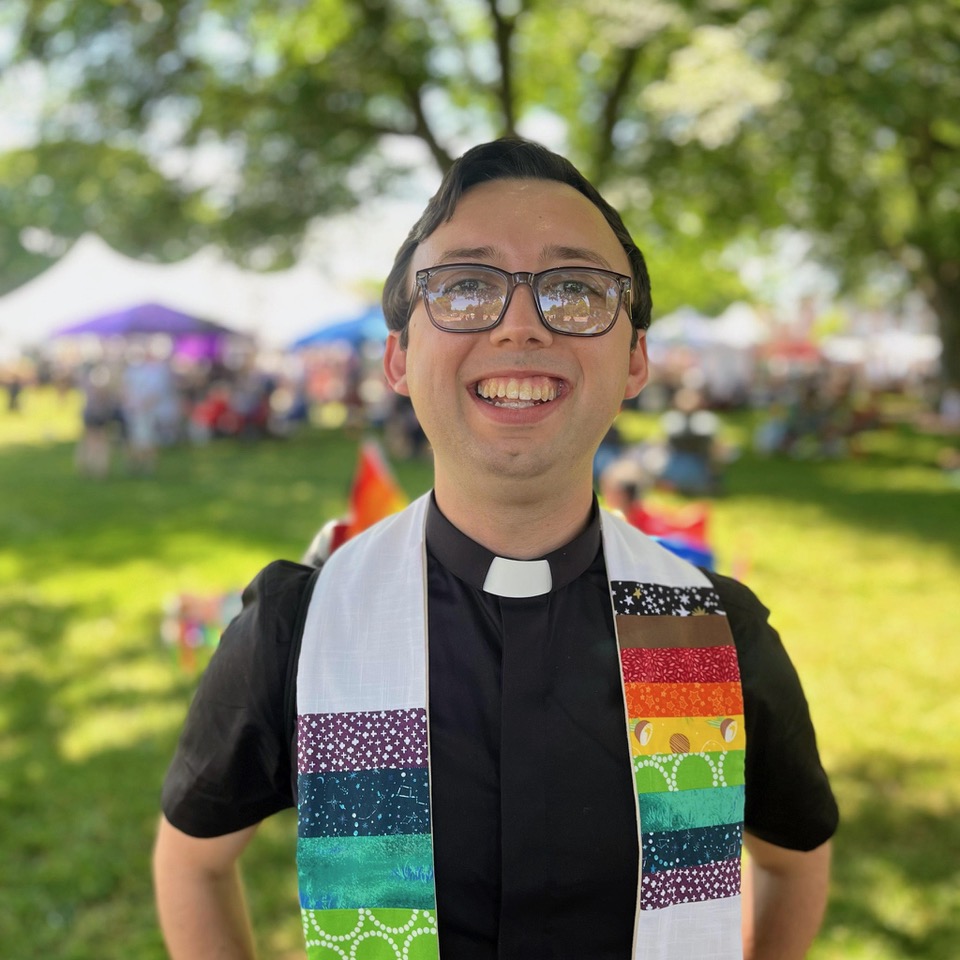
Brent Sheffer O’Neill (he/him) is a caregiver, Pastor, and Licensed Clinical Social Worker. He earned a B.A. in Biblical and Religious Studies at Messiah University, followed by a Master of Divinity and Master of Social Work at Boston University. In a full-circle moment, Brent was ordained at and currently pastors the small congregation that baptized him as an infant. He recently served as Vice Moderator of the General Assembly Relationships Committee at the 227th General Assembly.

Unbound Social