
Isaiah 60:1-6 ~ Psalm 72:1-7, 10-14 ~ Ephesians 3:1-12 ~ Matthew 2:1-12
In loving memory of my guiding light
Keisha E. Sanders
8/2/1975 to 12/17/2025
The birth of Christ had been anticipated and foretold before commandments were etched in stone, even before the weight of oppression threatened humanity’s dance at the dawn of liberation. The timeless words of the prophets proclaim the arrival of One whose presence would “defend the cause of the poor of the people, give deliverance to the needy, and crush the oppressor” (Psalm 72:4). Amos foretells the restoration of David’s fallen kingdom (Amos 9). Jeremiah weeps over ongoing disobedience, yet prophesies about a “Righteous Branch” from David’s line (Jeremiah 23). Micah proclaims a Ruler to be born in Bethlehem (Micah 5), and Obadiah speaks of the One who will bring deliverance (Obadiah 1).
These prophetic voices teach us something important about proclamation in lament. Lament is the ways in which our spirit refuses to become comfortable with suffering. Lament is not the absence of faith or joy; lament is the presence of sorrow amid faith and joy. The prophets cried because they could feel the distance between God’s vision for humanity while existing in the reality of oppression and grief. They did not pretend that the suffering was not real. They named the suffering—and proclaimed Christ’s coming.
I, like these prophets, know suffering well enough to name it. I have sat in the stillness of funeral homes and in the busyness of hospital rooms, wondering if the suffering of the present time indeed compares to the promise of healing yet to be revealed (Romans 8:18). Truly, by December 2025 I had already survived enough catastrophic suffering for one lifetime. And you too. Domestic terrorism, attacks on knowledge, ethnic erasure, struggle to belong, Earth in despair and all of -isms inflamed and life, birth, marriage and death all at the same time.
Yet, each time the flame of lament helps reveal a deeper truth. Lament has become part of who I am. Until July 2025, I spent most of the year healing my mind, body and spirit after experiencing prolonged workplace harassment. However, on July 4 my attention shifted suddenly to help shepherd my community in response to a natural disaster during which over 120 people died. Neighbors in the sunset of their lives were forced to navigate insurance claims while searching for memories that were ultimately drowned in the waters of the Guadalupe River.
Amid navigating the joys and challenges of aging parents, completing a doctoral degree and life-ing in general, I talked to my friend Terrance regularly. We became fast friends at 13 years old. Our families had front row seats to our shenanigans. During our college years we started talking about life together as “ol’ folk.” We would tease each other in alliterative phrases like, “crying crocodile.” Once we were scheduled to meet up. He was late. I called him a “late lazy leprechaun.” We knew the rhythms of each other’s lives. We were confident of the space shaped by one another in our lives.
In September, Terrance’s husband, Marcus, called me to say that Terrance was not well. From that moment in September to October 25, we rode the roller coaster of lament complete with laughter, lab tests, and libations. Terrance’s suffering body had taken priority in our lives. We had seen my friend not be well before. This time was different. I became eerily aware of the necessity of both light and dark. Perhaps this is why lament matters so deeply: our tears can testify that something is not as it should be. Our grief can become a prayer for peace. Our longing can become a proclamation that bondage is not God’s design.
When I talked to Marcus on November 7, I accepted a somber fact that I could not yet vocalize. Three days later, on November 10, we sat helpless as Terrance was admitted into hospice care. Marcus and my spouse, Lorenzo, listened as I told Terrance of how unprepared I was to do life without him. But, within was a painful knowing that Terrance’s body could no longer contain his larger than life spirit. When I looked at him, I knew his soul wanted to be free from the body that had become his bondage.
It is as if the human soul was formed for freedom. The prophet Isaiah takes care to remind us that light coming does not erase the darkness we have already experienced. Instead, light enters darkness and reveals what has been hidden. This revelation gives us courage to name our pain, while we claim our experiences and lament our losses, as we move forward, carefully toward hope calling. I imagine the sojourners following a single star that promised to lead them to Mary’s newborn son. I can sense the increased anticipation they experienced with every single step. I imagine their weary bodies wanting to rest, but their willing spirits urging them forward. To be sure, they started this journey depleted. For the command to “Arise, shine; for your light has come” (Isaiah 60:1) is given while “darkness shall cover the earth” (v. 2).
The light that shines in lament can absolutely reveal love in hidden places. By the time Terrance was admitted to hospice care I had a new leader at work. This leader called me in the midst of deep sorrow to pray for me. It dawned on me within the moment that I did not have to go looking for light. Light found me. That moment was an epiphany. Epiphany invites us to welcome the light of Christ—not only in moments of celebration, but also in difficulty. And again, to realize that our spirit refuses to become comfortable with suffering.
Terrance’s spirit left his suffering body on November 19, 2025.
His funeral was scheduled for December 6th. The days leading to his funeral were heavy, difficult, laborious days. My mind still could not conceive of a life without a lifelong friend. I found respite during those tough days in conversation with Keisha, my sister, who, like all of my immediate family, had grown to love Terrance. She called me daily to check on me, asking basic questions like, “Whatcha eat today?” It was not unusual for us to talk everyday, but it was unusual for us to communicate multiple times a day. But, Keisha was diligent with her check-ins and persistent in her care.
Epiphany also invites us to lift our eyes and notice the light, hope, and unexpected blessings God places before us. Isaiah 60:4 calls us to “lift up your eyes and look around,” reminding us that hope often becomes visible when we are willing to see differently. We can recognize that God’s presence can appear in people, moments, and places we may not expect. Sometimes the brightest light shines when we search beyond our immediate circumstances and notice who has gathered around us. The command to “look and be radiant” in verse 5 is not about sight, but vision. When Christ’s light reveals what darkness has hidden, our hearts are guided through sorrow with hope, teaching us to focus on the light that shines within and beyond bondage.
On the day of Terrance’s funeral I stood prepared to eulogize my friend, depleted. I again imagined weary bodies longing for rest, looking for Jesus, and the single guiding star that led them forward. I scanned the congregation of people and saw my sister seated in the back pew. Keisha’s presence was light and her smile lightened the burden of the moment. I did not expect to see her. Yet, there she was wearing a bright smile to match her green cardigan. I smiled back. At the end of the funeral, after the recessional, as my sister embraced me she said, “I’m proud of you. I know that was hard. I love you Boo.”
I had another epiphany; the darker the moment, the brighter the guiding light.
This Epiphany, as we name the truth of where we are, may we have the hope to proclaim our own restoration like Amos, the wisdom to recognize the One who brings deliverance like Obadiah, and the faith to follow the light that leads to revelation like Isaiah.
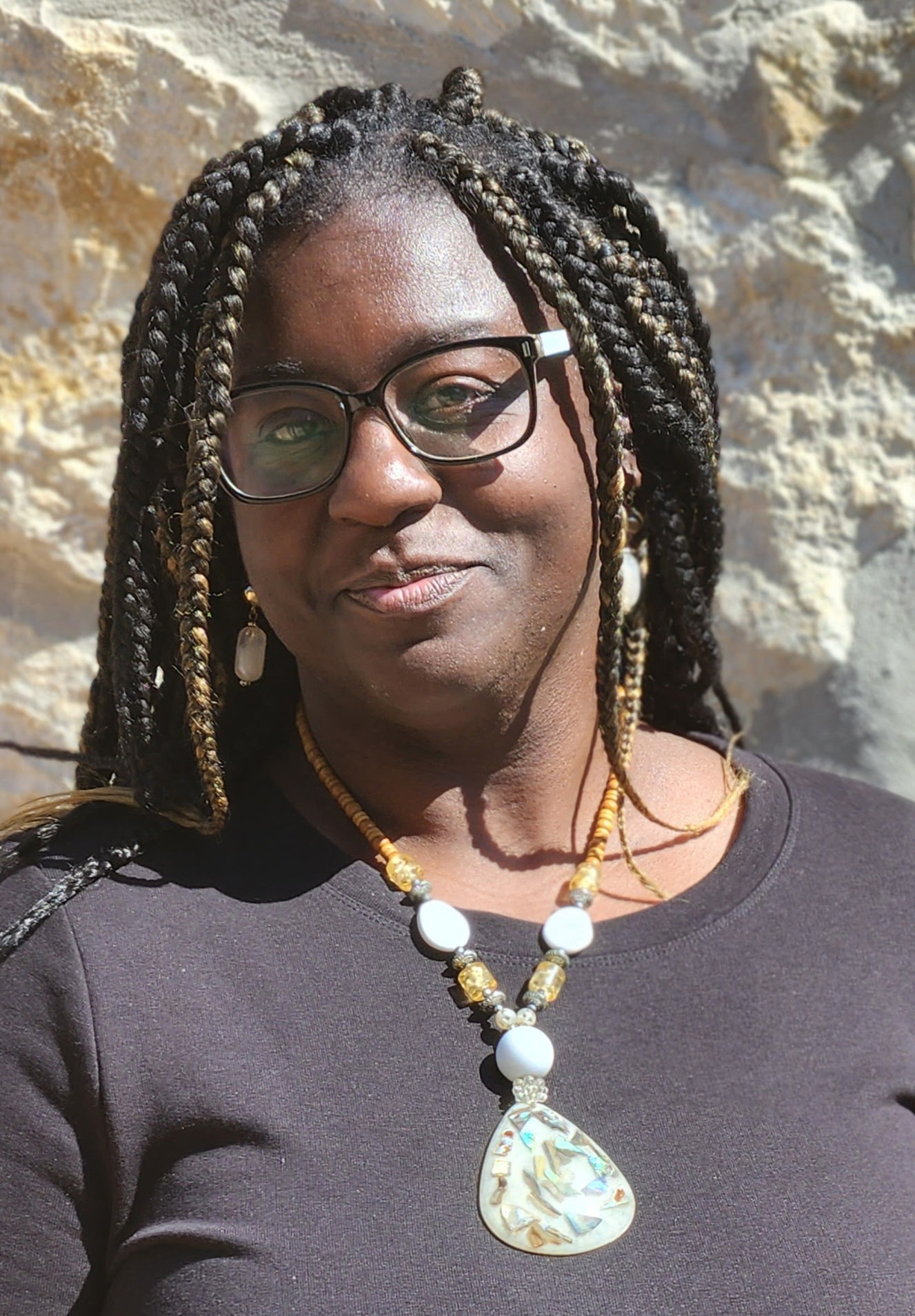
Natarsha P. Sanders works as the Associate for Intercultural Leadership Development and Recruitment at the Presbyterian Life & Witness Agency of the PC (USA). She graduated from Hollins University and North Carolina Central University with a BA in Philosophy and History and a M.A in Teaching respectively. She earned a D.Ed.Min (doctorate in educational ministry) from Columbia Theological Seminary in Decatur, GA. Natarsha’s research examined the impact of white supremacy on white Christian males over 65 years old. She is passionate about education, the arts and inclusion. She resides in North Carolina with her niece, Kiana, nephew, Kaden, mother, Cynthia and husband, Lorenzo A. Watson, PhD.

Unbound Social