

Joel 2:1-2, 12-17 or Isaiah 58:1-12; Psalm 51:1-17; 2 Corinthians 5:20b-6:10; Matthew 6:1-6, 16-21
“For where your treasure is, there your heart will be also.”
Over the past weeks and months I have been hearing a lot about food. Immigrant families in Minneapolis too afraid to go to work, school, or the grocery store because of the violent presence of ICE on the streets. Emergency food distribution centers in Kansas running out of food because the need is so great. New Disabled South receiving 18,588 applications totaling $4.1 million worth of $100 and $250 requests for emergency assistance during the November 2025 government shutdown. And on Feb 1, 2026, new work requirements tied to SNAP, the largest food assistance program for families in need in the richest country in human history, started with millions being impacted.
In the US, we throw away more food than it takes to feed everyone who’s hungry in the world. Donald Trump’s “big bad bill” cut an estimated $186 billion of the nation’s “treasure” from SNAP funding – paving the way for entire states to discontinue life-saving food assistance programs. That same bill tripled the funding for ICE – paving the way for increased child detention, ICE agents terrorizing our streets, and more violence to unfold. And before the funneling of resources away from poverty alleviation and into community militarization fully takes place from that bill alone, families from Minneapolis to Maine to Mississippi are already saying their biggest concern is going hungry.
Lent is a time of fasting. Many throughout the world go without food on Ash Wednesday and continue a practice of fasting, repentance and prayer for the next 40 days. But that fasting and hunger is not about those with LITTLE sacrificing MORE. It’s not about God saying: “I didn’t make enough food for everyone to eat.” Nor “my abundance will trickle down from the rich to the rest.” In the Bible, Jesus does not say: “Get a job!” to the unhoused or disabled of society. Nor “I want Peter to have to rob Paul” to be able to pay bills. The Bible does not proclaim a little charity is as good as you all can do. Nor that the powerful should get tax breaks and the poor shall pay for the pleasures of the rich.
Instead the prophet Isaiah reminds us: “Is not this the kind of fasting I have chosen: to loose the chains of injustice and untie the cords of the yoke, to set the oppressed free and break every yoke?…If you do away with the yoke of oppression, with the pointing finger and malicious talk, and if you spend yourselves on behalf of the hungry and satisfy the needs of the oppressed, then your light will rise in the darkness, Your people will rebuild the ancient ruins and will raise up the age-old foundations; you will be called Repairer of Broken Walls, Restorer of Streets with Dwellings.”
We live in a world where we’re taught that hunger and sacrifice is necessary. Where the rich and powerful get to ask for and receive everything while the poor and immigrant and LGBTQ people and Black people are considered lucky when we get anything at all. Sometimes to call attention to the horror of violence and the reality of oppression, people do sacrifice themselves (giving one’s life to the struggle or bearing witness to the suffering around). But throughout the Bible, it is clear, God wants mercy not sacrifice. Sacrifice shouldn’t be necessary. It shouldn’t be inevitable. If we live the way the God of justice intends, ALL will have love and mutual solidarity and kindness and flourishing. No one will be hungry.
So this Lent, this season of holy uprising and national and international crisis, let us NOT lower our standards. Don’t preach a smaller gospel. This is no moment to get in a defensive crouch to fight off the worst attacks without also putting forth a vision of a world where people’s needs are met with real programs, not diversionary rhetoric, health care cuts, detaining and strip searching children, scapegoating LGBTQ people or trashing the belongings of the unhoused. No. This is not a space to wait and hope that others will stand up to bigotry and injustice, inequality, budget cuts and even death by poverty. Instead it’s a time for each of us to rise up as the leaders we are looking for.
I am emboldened by the words of Jesus and the Bible that it’s not poor people who are sinners, rather it is poverty that is a sin against God and if we want to honor and worship God, we must commit our lives to fighting poverty and suffering and bigotry and racism. We must put our treasure and our heart on everybody in, nobody out. We must cry justice. We must pray freedom.
This Ash Wednesday amid our ritual fasting and prayerful observations, let us remember that Jesus implores nations to feed the hungry, care for the children and welcome the immigrant. The prophet Joel says: “You will have plenty to eat, until you are full, and you will praise the name of the Lord your God, who has worked wonders for you; never again will my people be shamed. I will pour out my Spirit on all people. Your sons and daughters will prophesy, your old men will dream dreams, your young men will see visions.”
God does not promise an end to hunger and violence in the afterlife. It is for the here and now! And it is for absolutely, wholly, completely everyone. In fact the passage from Matthew 6 teaches that “where your treasure is, there your heart will be also,” actually tells the rich they can’t take it with them. That there’s no reason to store up treasure because moths and plagues can just ruin all of that. Instead the rich and powerful are called to fast from oppression. Our whole society is called to lift from the bottom so everybody can rise.
As is often the case, Rev. Dr. Martin Luther King summed up mercy not sacrifice and the true meaning of Ash Wednesday (and I would assert Matthew 6). He spoke in “Where Do We Go From Here?,” “One night, a juror came to Jesus and he wanted to know what he could do to be saved. Jesus didn’t get bogged down in the kind of isolated approach of what he shouldn’t do. Jesus didn’t say, ‘Now Nicodemus, you must stop lying.’ He didn’t say, ‘Nicodemus, you must stop cheating if you are doing that.’ He didn’t say, ‘Nicodemus, you must not commit adultery.’ He didn’t say, ‘Nicodemus, now you must stop drinking liquor if you are doing that excessively.’ He said something altogether different, because Jesus realized something basic–that if a man will lie, he will steal. And if a man will steal, he will kill. So instead of just getting bogged down in one thing, Jesus looked at him and said, ‘Nicodemus, you must be born again.’ He said, in other words, ‘Your whole structure must be changed.’ A nation that will keep people in slavery for 244 years will ‘thingify’ them—make them things. Therefore they will exploit them, and poor people generally, economically. And a nation that will exploit economically will have to have foreign investments and everything else, and will have to use its military might to protect them. All of these problems are tied together. What I am saying today is that we must go from this convention and say, “America, you must be born again!”
And isn’t that it? In this season of Lent when we are called to fast from injustice, to turn away from inequality, may we hear the message “America you must be born again”. “The whole structure of your society must be changed”. Stop putting your treasure in terrorizing our communities. Stop declaring and funding war. Start investing in health care and good food and adequate housing. We say poverty no more, we want justice for the poor. That is where your treasure and your heart should be.
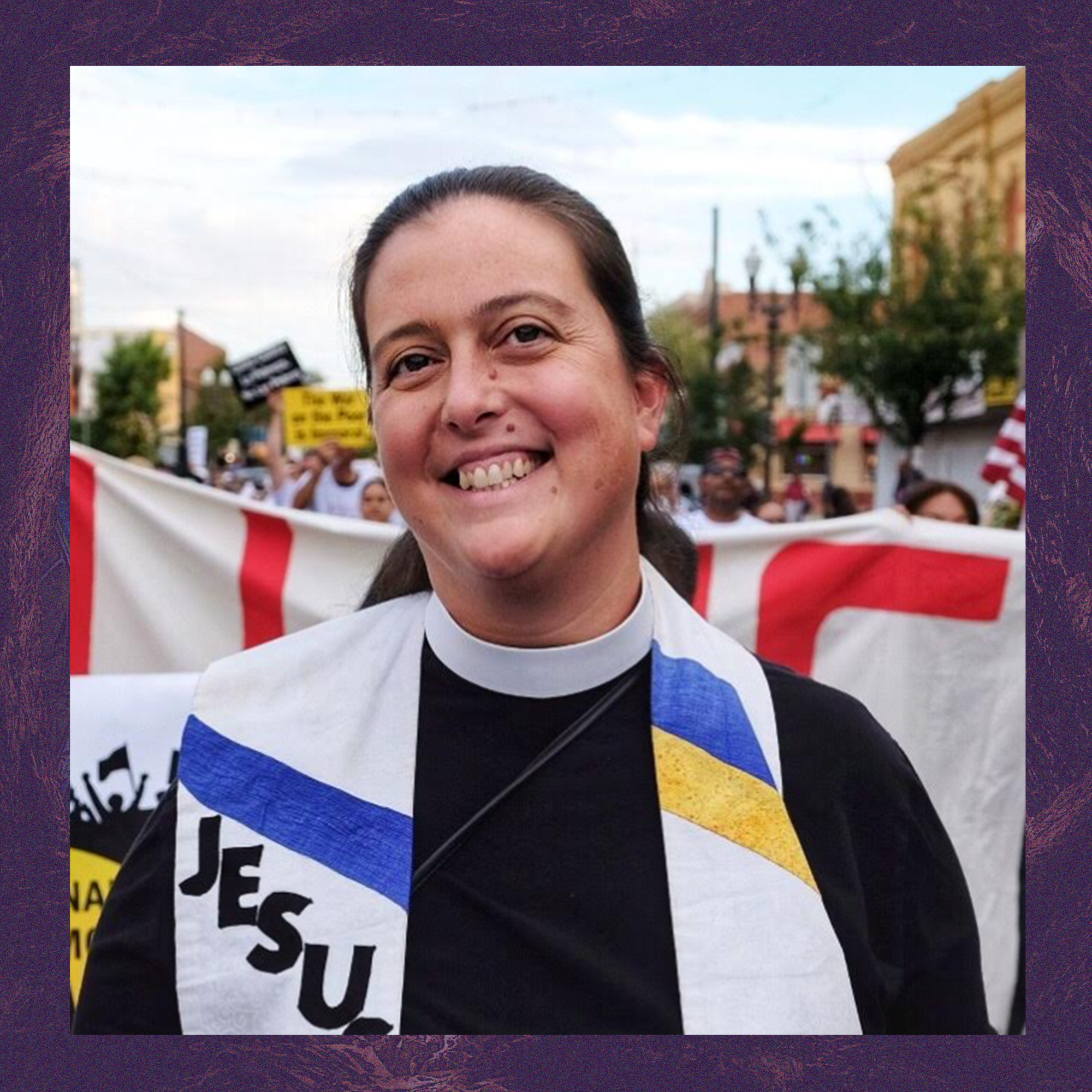
The Reverend Dr. Liz Theoharis is a theologian, pastor, author, and anti-poverty activist. She is the Director of the Kairos Center for Religions, Rights, and Social Justice and Co-Chair of the Poor People’s Campaign: A National Call for Moral Revival. Rev. Dr. Theoharis has been organizing in poor and low-income communities for the past 30 years. Her books include: You Only Get What You’re Organized to Take: Lessons from the Movement to End Poverty (Beacon, 2025), We Pray Freedom: Liturgies and Rituals from the Freedom Church of the Poor (Broadleaf Press, 2025) and Always with Us?: What Jesus Really Said about the Poor (Eerdmans, 2017) and she has been published in the New York Times, the Washington Post, Politico, Sojourners and elsewhere. Rev. Dr. Theoharis is an ordained minister in the Presbyterian Church (USA) and teaches at Union Theological Seminary. She has been awarded the Freedom Award from the National Civil Rights Museum, the Selma Bridge Award, the Women of Spirit Award from the Presbyterian Church (USA) and many others.

Unbound Social