
Isaiah 60:1-6; Psalm 72:1-7, 10-14; Ephesians 3:1-12; Matthew 2:1-12
The Feast of the Epiphany
In this Epiphany season the birth of Jesus Christ assures us of God’s presence and identity in our hearts and in our lives. Because of this we may take solace in times of uncertainty and darkness, for we know that Jesus, the light of the world, has come.
Ephesians 3:1-12
The Apostle Paul’s letter of Ephesians was written to gentile Christians to remind them that although they were once alienated from God and God’s people, the Jews, they would now be made whole and included within the family of God. Thus, restoration and veneration become sacred acts in Epiphany. It is here where we recommit ourselves as one.
Our country and our faith are deeply divided, and in my assessment, this is because many of us within the faith don’t read the Bible, or have a relationship with God. Both are key elements of our faith, but most Christians simply hold fast to the theology of their inner circle, which can be harmful and just wrong. When we connect with the relics of our faith, we come to know God better. When we pray or read our sacred text we can’t help but to know the unassailable truth that is frequently distorted. For example, the eunuch found throughout the cannon is the archetype for today’s transgender person. Therefore, what Jesus says about the eunuch (Mathew 19:12), helps us to understand that some transgender people are transgender because they were born that way, because others made them that way, and some are transgender for the sake of the kingdom of God. In Isaiah 56, the prophet asserts that the eunuch who keeps God’s commandments will have a high place in God’s house – this is in the text if we only read it. Epiphany demands that God’s people be unified. In knowing God, we know the timeless truth —- Jesus’ birth means that everyone belongs.
We come to know the spirit of God as we commune with God through prayer, meditation, and through assembly. This is why communities of accountability are important, and this is why we need one another. The church is divided because we frequently lean onto our own understanding, because we failed to study, to show ourselves approved, workmen who are able to rightly divide the word of truth.
Of course, the central message of Epiphany is that Jesus the light of the world has come, and in doing so, all have access to God. In Christ there is neither Jew, nor gentile. By itself, the matter of who was Jewish or gentile was highly contentious during the time of the apostle Paul. To add further context, neither Jesus, nor Paul, were Christian. We seem to forget this. In fact, what early church scholars tell us is that in the first century, Christianity was in a fledgling state. So much for today’s Christian who can be more worried about a title than the tenants of our faith.
Today, there seems to be an endless stream of things that divide us – race, culture, gender, and our politics. Today, LGBT people are routinely kept from the assembly of God, and transgender people are treated worst of all. Epiphany reminds us that we are all one in Christ Jesus, and it calls us to recommit ourselves to the singular goal of unity under the author and finisher of our faith.
Epiphany is a time for faith leaders to accurately learn and teach the Bible, and for us to know what it means to put scripture in context. Many within our faith wrongly believe themselves to understand accurately the Bible & what it says, but if you survey those closest to you, you’d find that some Christians routinely mix-up Bible figures and wrongly remember biblical narratives. With such high stakes as our spiritual health, our lives and others in the faith, we should take better care. Epiphany is a time of rededicating ourselves to learning more about our faith, and for getting to know the spirit of the living God that exists in the people of God.
Good theology should be shared like communion, and even challenged or critiqued in community, but because most within the faith hold their theology as inerrant and untouchable, we are divided. Theology should not alienate, but instead unify. The theology of your church should be able to withstand a holy review, and the same is true for any inner-circle-theology, or the theology of a believer’s family. For in truth, there is but one theology and that is of Jesus Christ who came that we might all be free.
Of course, the central message of Epiphany is that Jesus the light of the world has come, and in doing so, all have access to God – in Christ there is neither Jew, nor gentile.
Gospel of Matthew (2:1 -12)
As they traverse from lands afar, the Magi show us the way. They cross many different nations and encounter many different people to welcome God incarnate. Their pilgrimage affirms that God is no respecter of persons. With God, social and relational identities do not matter. Every life is of value. Each of the wisemen, gentiles (non-Jews), represent the revelation that Christ is for all people -not just for a select few – transgender or not. Through the epiphany, all are found holy.
Psalm 72 1:10, 10-14
Psalm 72 harkens back to when Kings were commonly revered as God‘s representatives on earth, and when leadership was said to have walked with God. Some see the Psalm as prophecy, foretelling the coming of Jesus who would be a just & merciful peacemaker. In other instances, we affirm all Jesus continues to accomplish in our lives, even as we pray for those in seats of power today.
As God is made available to all, we are invited to grow in a deeper relationship with God, through prayer and supplication. While the psalmist prayed for God’s favor, prosperity and good health, we pray that God protects the vulnerable, provides for the poor and keeps safe all who are at risk of being harmed. We pray that God’s will be done on earth, as it is in heaven. We pray that people know the true story of Jesus Christ and not the story of Jesus that has been corrupted by those who seek political gain or those who deceive others only to acquire more money for their coffers. In Epiphany, the story of Jesus has only just begun. He lives. He lives. Christ Jesus lives today.
Epiphany calls us to recommit ourselves to being in relationship with our creator through prayer and supplication. Knowing that, in all things, God has the final say. When distractions cause alarm, we return back to the truth of Epiphany – that Jesus Christ shall reign for ever and ever. God is indeed faithful, for Jesus is King of Kings, and Lord of Lords, hallelujah forever.
Isaiah 60:1-6
Arise, Our Light has Come
As the prophet Isaiah commands –
Arise, Jesus the light of the world will never leave us nor forsake us.
Arise, for all who bear the image of God hold light within their hearts. This is the truth of the imago dei.
Arise, the Lord will keep us safe from the perils of darkness.
Arise, in jubilation.
Arise, in the assurance that the light you hold is the desire of nations.
Sisters feel the warmth of the light. See how it brings protection and provision. Jesus, the light of the world is worthy to be praised.
For darkness is empire that targets and tramples the vulnerable. It is within the unhoused lesbian, gay, bisexual, and transgender youth who are pushed into the streets by parents who are not guardians; darkness is the poor-life-quality and low-life-expectancy that yokes transgender people. Darkness is the politicized life completely spent for the abuser’s gain.
Brothers, light has come. It is on our backs and at our flanks. It envelops the body and the spirit and warms the heart and cheers the soul. As we rise into the glorious light, she will eternally vanquish darkness. In rising we meet God’s grace that helps us to oppose the maniacal and tyrannical forces of our world that seek to devalue our lives and disregard our existence.
Rise to take solace in knowing that God is with us, and the light is in our hearts. We are keepers of the light. We wield the sacred flame. Therefore, there is nothing to fear, for the glory of the Lord is upon us. God is with us even ‘til the end of time.

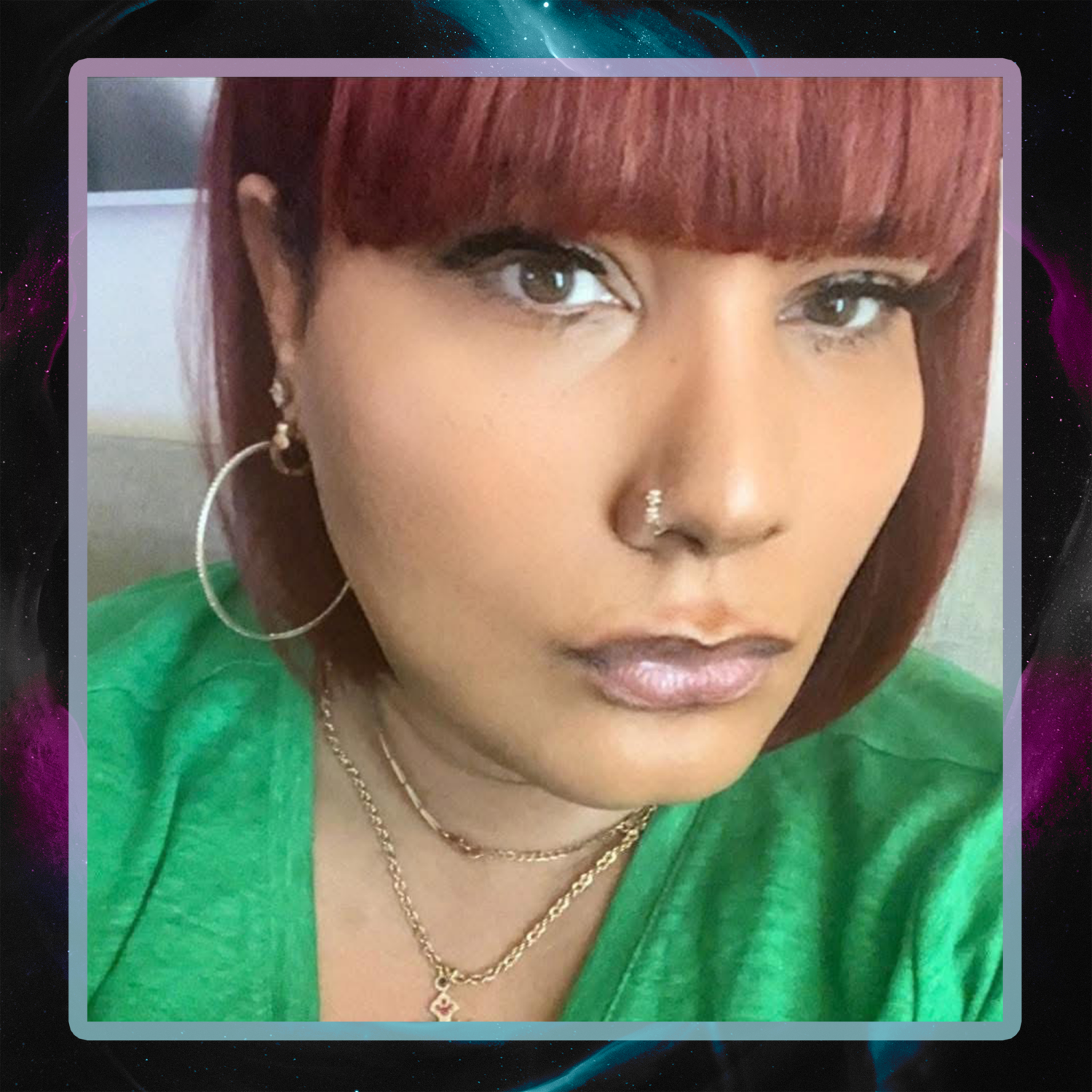
Rev. Danielle Dufoe, MEd,MDiv,ThM Is a woman of many first – she is our country’s first African American (Black) Transgender woman to graduate from a Seminary, a Divinity School & both kinds of theological institutions. Ordained American Baptist, she is also the nation’s first Black trans woman to be ordained by a major denomination.
A native of New Jersey, Danielle is a graduate of ODU, Rutgers, Howard University School of Divinity, & Columbia Theological Seminary.


Unbound Social