

Many today worry about the disappearing church in the Holy Land. In recent meetings with Churches for Middle East Peace (CMEP), a broad coalition of 36 member denominations and organizations representing more than 88 million American Christians working towards a comprehensive resolution to conflicts in the Middle East, another profound threat emerged. David Wildman, of the United Methodist Church’s General Board of Global Ministries, made a statement that caused many of us to catch their breath. “Next year this time, there probably will not be a Palestine!” As devastating as this assessment might sound, no one argued—such is the bleak reality currently faced in the East Jerusalem, West Bank, and especially in Gaza. How did we get here, and is the culmination of the ethnic cleansing of Palestine inevitable?
While the atrocities of October 7, 2023, changed history, that day does not mark when the hostilities began. Nor did the violence between Arabs and Israelis commence in 1967, with the Six Day War that resulted in the crippling occupation of East Jerusalem, the West Bank, and Gaza. Nor did it begin with the Arab-Israeli War of 1948, in which Israeli Zionist forces destroyed 531 Palestinian villages and displaced 750,000 Palestinians as refugees as Israeli historian Ilan Pappé writes about in his book The Ethnic Cleansing of Palestine. The starting point was also not 1947, with the U.N. Partition Plan that granted Jewish settlers (11% of the population) 56% of Mandate Palestine, and the majority Arab population received only 42% for a future Palestinian State. The beginning of the current tragedy goes back long before the past 78 years with the influx of an external population into historic Palestine and its devastating effects on the indigenous Arab and Jewish population. However, Arabs and Jews have not been battling one another for thousands of years since the time of Ishmael and Isaac. The brothers did not spend their lives as enemies of one another, but instead came together at the burial of their father Isaac (also called Israel) (Genesis 25:9). And in the land, in large part, Palestinians and Jews lived side by side in peace most of the reign of the Ottoman Empire and before until the late 20th century.
The Christian and Jewish Zionist movements were two of the most significant factors leading to today’s realities on the ground. Zionism began as a nationalist movement in the late 19th Century in Europe, advocating for a Jewish homeland in historic Palestine. John Nelson Darby, a Plymouth Brethren preacher, popularized Christian Zionism in which he proposed a dogmaticly literal reading of scripture that supported the rebuilding of Israel as necessary for the second coming of Jesus. The second form of Zionism was Jewish Zionism, popularized by Theodor Herzl, an Austro-Hungarian Jewish journalist and lawyer, who in 1897, convened the First Zionist Congress in Basel, Switzerland. From these movements, we can perceive the true intentions of the movements and their future adherents.
Both the Christian and Jewish Zionist movements envisioned a Jewish state apart from Palestinians. In his diaries in 1895, Herzl wrote that the “penniless population” (the Palestinians) needed to be “spirited away” from Palestine to neighboring countries. This sentiment was further supported by David Ben-Gurion, the first Prime Minister of Israel, when he wrote in 1937 to his son, “My assumption (which is why I am a fervent proponent of a state, even though it is now linked to partition) is that a Jewish state on only part of the land is not the end but the beginning….” One of the most famous expressions of the early Zionist movement includes the false saying of “A land without a people, for a people without a land.” The intention from early on was the displacement of the Palestinian people, and Israel’s possession of all the land as a Jewish state is further supported by subsequent writings and actions.
Ilan Pappe, the Israeli historian, has well documented the beginning of the ethnic cleansing of Palestinians and the beginning of the Israeli settler colonialism in the early 20th Century. While a process that was conceptualized before it was apparent, the ethnic cleansing of indigenous Arabs soon became more evident that it was Zionism’s real intentions. Pappe defines settler colonialism: “In settler colonialism, the colonizer aims to wholly replace native society with the society of the colonizer…The trouble is that the lands are never empty. For settlers…the indigenous population, so obviously different from them, is an obstacle to be removed. This can never be done without brutality…Put simply, the land is not empty. So the settlers empty it.”
Consider the displacement of the Palestinian population over the 20th century. The illegal Israeli Settler Movement began in 1967, in the aftermath of the Six Day War, as Israeli citizens began moving illegally, according to the Fourth Geneva Convention, into the occupied West Bank, the historic and future homeland of the Palestinian people. Since then, the United Nation’s Office for the Coordination of Humanitarian Affairs (OCHA) reported that there are now approximately 737,332 Israeli settlers in the West Bank, including East Jerusalem.
And settler colonialism continues today. OCHA also notes that an unprecedented 49 new settlement outposts have been established recently, significantly exceeding the average of eight new settlements per year in the past decade. The UN office reports 757 settler attacks on Palestinians in the West Bank since January, up 13 percent from 2024. Deaths since January 2025 already near almost 1,000 Palestinians killed by settler violence. Settler extremism results in an increasing number of Palestinians forcibly discplacement and the immigration of young adults who leave the land in search of safety and opportunities. While the eyes of the world have been focusing on Iran, Israel has been carrying out more and more of their ethnic cleansing in the occupied West Bank.
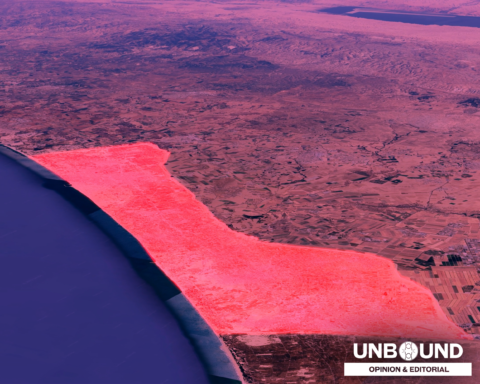
At the same time, the forced displacement of the Palestinian people has been dramatically increasing in Gaza. As of early August 2025, since October 7, at least 57,680 Palestinians have been reported killed including at least 18,000 children, 137,409 adults and over 40,000 children have been injured. As of today, more than two hundred people have died of starvation or malnutrition. At least 1.9 million people, or about 90% of the population, have been permanently displaced. Most recently, Israel’s defense minister has laid out plans to force all Palestinians in Gaza into a camp on the ruins of Rafah, in a scheme that legal experts and academics described as a blueprint for ultimate displacement outside of Israel/Palestine—thus resulting in the completion of ethnic cleansing in Gaza. And on August 8, 2025, the Israeli Cabinet once again voted to displace 800,000 Palestinians in the North of the Gaza Strip in order to execute a complete invasion and take over of Gaza City.
The elimination of Palestinian people from their historic homeland is not inevitable. Outside of shifts in the Israeli government’s strategies, the United States and Western powers exist as the only entities with the power to turn the current trajectory. Western powers, in their arming of the Israeli military, are culpable for the violations of international law that have resulted in the deaths of tens of thousands of people and the displacement of millions. The majority of U.S. civil society opposes the ongoing war in the Gaza Strip and supports a comprehensive ceasefire, a flooding of adequate aid and assistance into the enclave, and the release of the remaining 50 hostages, of whom it is believed less than half may still be alive.
Ending the current genocide in Gaza is the issue of our day. The decades of bloodshed and the ongoing violence perpetrated by the Israeli occupation and militants in Palestine must be brought to an end. According to a Pew Research Center study released in April 2025 more than half of U.S. adults (53%) now express an unfavorable opinion of Israel[1] and global antisemitism is on the rise. An overwhelming share of likely Democratic primary voters—71 percent—say the US should restrict military aid to Israel until it stops attacking civilians in Gaza, supports Palestinian rights, and commit to a long-term peace process.[2] These positions, however, are not widely supported by American policy makers. U.S. and global opinion about ending the atrocities in Gaza, our protests, and our advocacy are not enough.
We must organize and engage in a political process that will demand our representatives in Congress represent our views that the ethnic cleansing of the Palestinian people must be brought to an end. There will never be an end to violence and security for Israelis, Jewish and Arab, until the self-determination of the Palestinian people is realized. Until the world realizes that the futures of Palestinians and Israelis are inextricably linked, there will never be peace. As Mother Teresa said, “the reason we do not have peace, is because we have forgotten that we belong to one another.”
[1] https://www.pewresearch.org/short-reads/2025/04/08/how-americans-view-israel-and-the-israel-hamas-war-at-the-start-of-trumps-second-term/
[2] https://zeteo.com/p/exclusive-dem-voters-overwhelming?utm_medium=email

Rev. Dr. Mae Elise Cannon has served as Executive Director with Churches for Middle East Peace since 2016. An ordained pastor in the Evangelical Covenant Church (ECC), her ministry and professional background includes serving as the Senior Director of Advocacy and Outreach for World Vision-US, the executive pastor of Hillside Covenant Church (Walnut Creek, California), Director of Development and Transformation for Extension Ministries at Willow Creek Community Church (Barrington, Illinois), and as a consultant to the Middle East for child advocacy issues for Compassion International.
She earned doctorates in History (Ph.D) and Spiritual Formation (D. Min). Her Ph.D focused on American History with the minor in Middle Eastern studies from the University of California – Davis, focusing her dissertation on the history of the American Protestant church in Israel and Palestine. Cannon’s Doctorate of Ministry in Spiritual Formation is from Northern Theological Seminary. Cannon holds an M.Div. From North Park Theological Seminary, an M.B.A. from North Park University’s School of Business and Nonprofit Management, and an M.A. in bioethics from Trinity International University. Cannon completed her Bachelor of Arts degree at the University of Chicago in History, Philosophy, Social Studies, of Science and Medicine.

Ron Shive was the Sr. Pastor of First Presbyterian Church, Burlington for twenty years until his retirement in June 2022. He served as the Chair of the Middle East Study Committee (2008-2010) that was mandated by the 218th (2008) General Assembly. In 2024, he co-lead three delegations to Palestine. He now serves as one of the Carolinas’ Regional Coordinators of Churches for Middle East Peace.

Unbound Social