

In Black culture, there is a saying: call the roll.
If you grew up anywhere near a Black church, you know what that means.
It is the moment when the preacher begins to cook. And yes, that is sacred language. It is when she is no longer just delivering notes but standing inside memory. When the Holy Ghost shifts her posture, deepens her cadence, stretches her vowels, and lifts her voice into that space where testimony and theology collide.
It is when she begins naming the elders. The mothers. The freedom fighters. The saints who prayed us through. The teachers who would not let us quit. The ones who buried children and still sang. The ones who marched and still forgave. The ones who organized and still believed.
By the third or fourth name, someone in the pew feels the rhythm and hollers back,
Call the roll, Pastor!
Because they know this is not nostalgia. This is survival.
Calling the roll is how we remember who we are when the present moment tries to convince us we have never overcome anything at all and tempts us to believe that the future is not worth the struggle it will demand of us. It is how we train our hearts to hope again.
As we mark the 100th year of Black History Month, I feel a deep need to call the roll.
Not because it is February.
Not because it is ceremonial.
But because fatigue is real.
Because injustice feels recycled.
Because democracy feels fragile.
Because the church feels uncertain.
Because too many of us are walking around spiritually depleted.
We are tempted to believe this moment is unprecedented.
We are tempted to believe we have never faced odds like these.
We are tempted to believe we do not know how to get over.
But we do.
We know how because somebody made sure we would.
When Carter G. Woodson established Negro History Week in 1926, he was intervening in a lie. He understood that a people severed from their history are easier to marginalize, easier to miseducate, and easier to convince that their contributions are accidental rather than foundational.
What began as a week became a month. What began as corrective scholarship became cultural reclamation. What began as resistance became rhythm.
Black History Month has always been defiance against erasure. It has also always been spiritual formation.
Because when we call the roll, we are not simply remembering facts. We are remembering faithfulness.
And that roll stretches into the life of the Presbyterian Church.
Before there were diversity committees and anti-racism trainings, there was the Rev. John Gloucester organizing First African Presbyterian Church in Philadelphia in 1807, preaching liberation in a nation still chained to slavery.
There was the Rev. Theodore Sedgwick Wright, the first Black graduate of Princeton Theological Seminary, who refused to separate the Gospel from abolition.
There was Katie Geneva Cannon, who taught us that Black women’s moral wisdom is not supplemental to theology but central to it. She insisted that ethics must be embodied and that survival itself is a site of revelation.
There was Edler Garnett Hawkins, whose leadership signaled that governance and prophetic courage belong in the same breath.
There was the Rev. Elenora Giddings Ivory, the first to lead the Office of Public Witness after reunion, who carried our confessional commitments into the halls of Congress and reminded the church that faith without public courage is not Reformed at all.
There was Dr. Melva Costen, who reminded us that worship is not decoration but doctrine, who ensured that the songs of enslaved ancestors and Black congregations shaped the hymnals we now hold in our hands, teaching the church that what we sing reforms what we believe.
There was the Rev. Bertram Johnson, the first openly queer Black man to stand for co-moderator alongside the Rev. Eliana Maxim, embodying a truth many are still learning to proclaim: that Blackness, queerness, call, and Presbyterian polity are not contradictions but testimony.
There was the Rev. Dr. Gay Byron, who co-edited True to Our Native Land and helped anchor African American biblical scholarship in the life of the church, who showed us that reform is not only about polity and protest but also about interpretation, because when we read differently, we live differently.
And beyond the names that reached headlines, there are the Black ruling elders who kept congregations alive when funding dried up. The Presbyterian women who organized mission societies that sustained whole communities. The musicians who carried our theology in minor keys. The seminarians who stayed when syllabi ignored their histories. The caucus leaders who insisted the denomination tell the truth about itself.
Call the roll.
Because Black Presbyterians have never been an appendix to this church’s story. We have been its conscience. Its rhythm section. It’s theological midwives. It’s social witness when it was convenient and when it was costly.
The Presbyterian commitment to justice was not born in abstraction. It was forged in slavery debates, Reconstruction betrayals, Civil Rights courage, and ongoing reckonings around incarceration, migration, and economic exploitation.
Our confessions speak of justice because somebody forced the church to confront injustice.
Our polity evolves because somebody insisted the table be wider.
Our theology stretches because somebody refused to let European frameworks have the final word on God.
This is what it means to say the church is reformed and always reforming.
Ecclesia reformata, semper reformanda.
Not reforming toward trendiness.
Not reforming toward comfort.
But reforming toward faithfulness.
Black history inside the PCUSA is not about representation alone. It is about reformation.
It is about how the Spirit has used Black culture, its call and response, its communal memory, and its refusal to separate suffering from song to teach the broader church how to endure and how to hope.
And this is not a roll call for some of us. It is a roll call for all of us.
This is not a roll call for some of us. It is a roll call for all of us. Because Black history in the PC(USA) is not a niche narrative. It is part of the marrow of who we are. When Black Presbyterians pressed the church toward justice, the whole church was reformed. When Black theologians stretched our language about God, the whole church was deepened. When Black elders refused despair, the whole church learned endurance. So this centennial is not a sidebar celebration. It is an invitation to every Presbyterian to remember rightly—and to be reformed again.
Black history in this denomination is not a niche narrative. It is part of the marrow of who we are.
In this 100th year of Black History Month, we do more than celebrate.
We remember so we can resist despair.
We remember so we can reclaim courage.
We remember so we can reform again.
Because we have been here before.
Rights have been contested.
Progress has been reversed.
The church has stumbled.
And still.
Still, the ancestors prayed.
Still, the saints organized.
Still, the theologians wrote.
Still, the Spirit moved.
We are not depleted because we are empty.
We are depleted because we have forgotten the cloud of witnesses surrounding us.
Black History Month at 100 is not a closing chapter. It is a reminder that memory is a muscle. When we exercise it, we remember how to stand.
So when despair whispers that we do not know how to get over, when cynicism tempts us to shrink our witness, when reform feels exhausting rather than holy, lean forward and remember the rhythm.
Call the roll.
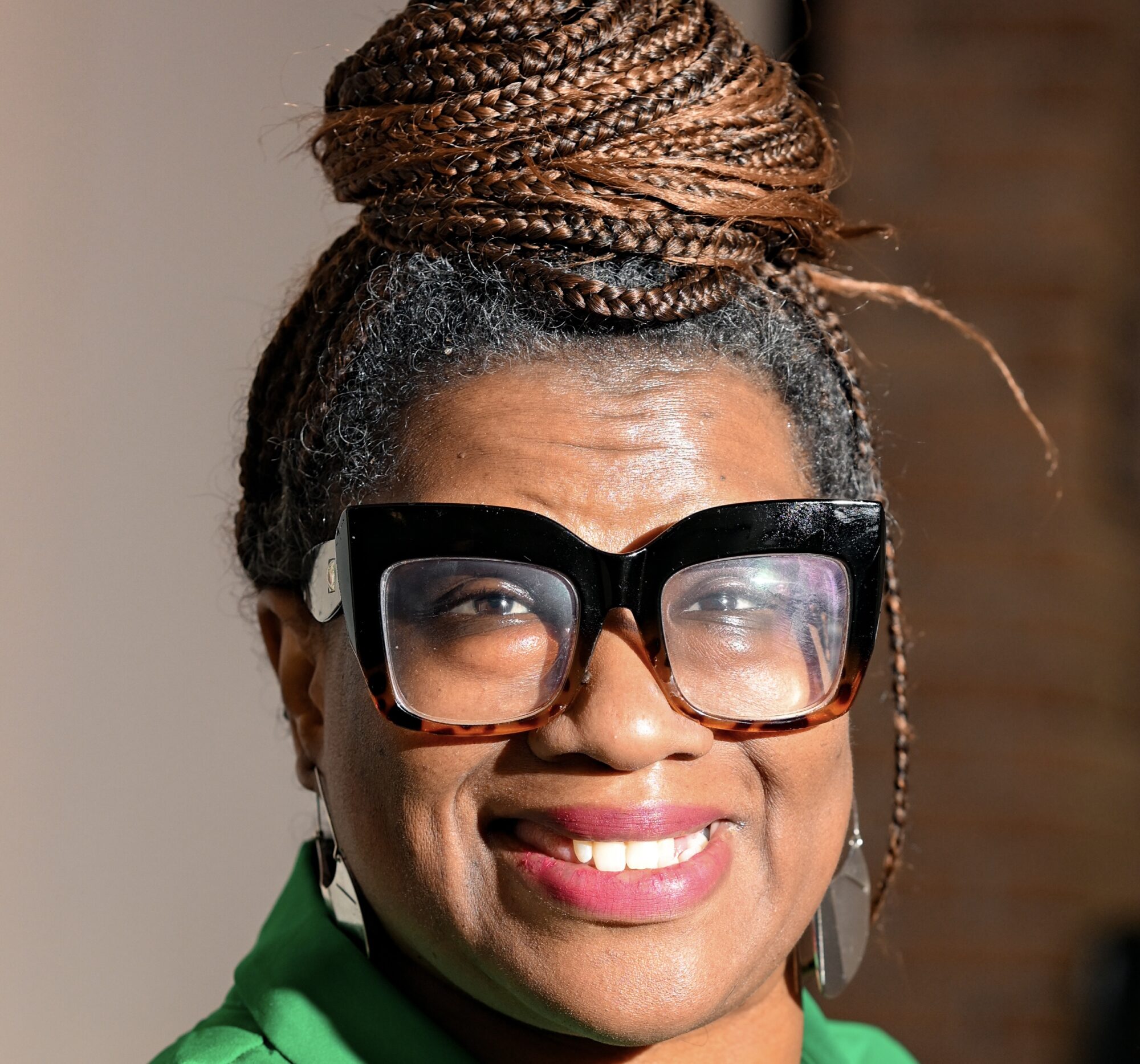
Shani McIlwain works as an independent writer at the intersections of faith, justice, and pop culture. A bestselling author, preacher, speaker, and executive coach, she believes freedom is central to faith and that truth-telling is a spiritual practice. A ruling elder at Faith Presbyterian Church in Washington, DC, and former moderator of the National Capital Presbytery, Shani helps communities interrogate power, challenge oppressive systems, and imagine more liberated ways of living and believing. You can find her on Substack with her weekly series Sometimes Church Looks Like and co-hosting the podcast Embracing Race: Conversations with Truth and Intention.



Unbound Social