
August 25: Day of Action
By W. Mark Koenig, Director, Presbyterian Ministry at the United Nations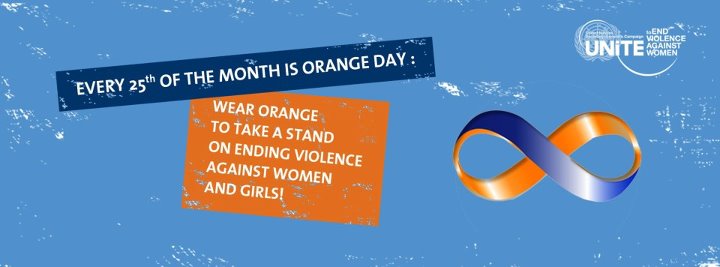 On August 25—and the 25th of each month—join people around the world in observing an Orange Day to work for an end to violence against women and girls.
As one of the most widespread violations of human rights, violence against women and girls includes physical, sexual, psychological, and economic abuse. It cuts across boundaries of age, race, culture, wealth, and geography. It takes place in the home, on the streets, in schools and workplaces, in farm fields and refugee camps, and during conflicts and crises.
Violence against women and girls takes many forms—from domestic violence to sexual violence to harmful practices to the systemic violence of poverty and economic inequity to femicide to so-called “honor killings” to rape as a weapon of war and beyond. This violence devastates lives, fractures communities, and stalls development.
Say NO—UNiTE to End Violence against Women is a social mobilization platform on ending violence against women and girls, and is connected with UN Secretary General Ban Ki-Moon’s campaign, UNiTE to End Violence against Women.
- Based on country data available, up to 70 percent of women experience physical or sexual violence from men in their lifetime—the majority by husbands, intimate partners or someone they know.
- In the United States, one-third of women murdered each year are killed by intimate partners.
- In India, 22 women were killed each day in dowry-related murders in 2007.
- In Guatemala, two women are murdered, on average, each day.
- Women and girls comprise 80 percent of the estimated 800,000 people trafficked annually with the majority (79 percent) trafficked for sexual exploitation.
- Approximately 100 to 140 million girls and women in the world have experienced female genital mutilation/cutting, with more than 3 million girls in Africa annually at risk of the practice.
- Over 60 million girls worldwide are child brides, married before the age of 18.
- As many as 1 in 4 women experience physical and/or sexual violence during pregnancy which increases the likelihood of having a miscarriage, stillbirth or abortion.
- Approximately 250,000 to 500,000 women and girls were raped in the 1994 Rwandan genocide.
- In eastern Democratic Republic of Congo, at least 200,000 cases of sexual violence, mostly involving women and girls, have been documented since 1996, though the actual numbers are considered to be much higher.
- Between 40 and 50 per cent of women in European Union countries experience unwanted sexual advancements, physical contact or other forms of sexual harassment at their workplace.
- In the United States, 83 percent of girls aged 12 to 16 experienced some form of sexual harassment in public schools.
The National Coalition Against Domestic Violence reports that, in the United States, one in every four women will experience domestic violence in her lifetime.
Violence runs contrary to God’s intentions for the world and for our life together. Violence against women and girls denies the image of God in which each woman and each girl, as well as each man and each boy, is created.
People, nongovernmental organizations, and governments have responded with efforts to address violence against women and girls. Say NO—UNiTE to End Violence against Women reports that some countries have made some progress, citing examples from the UN Secretary-General’s 2006 In-Depth Study on All Forms of Violence against Women:
- 89 countries had some legislation on domestic violence, and a growing number of countries had instituted national plans of action.
- Marital rape is a prosecutable offence in at least 104 countries.
- 90 countries have laws on sexual harassment.
However, there is still much to do.
Presbyterians have joined people of faith and goodwill in working to end violence against women and girls in a variety of ways. We have created and implemented policies, started and supported domestic violence centers, advocated for public policies, and provided study resources. Presbyterians Against Domestic Violence has created resources for worship and programming.
Participation in Orange Days on the 25th of each month allows Presbyterians and all Christians, individually and corporately, to raise awareness of violence against women and girls and to build on existing efforts.
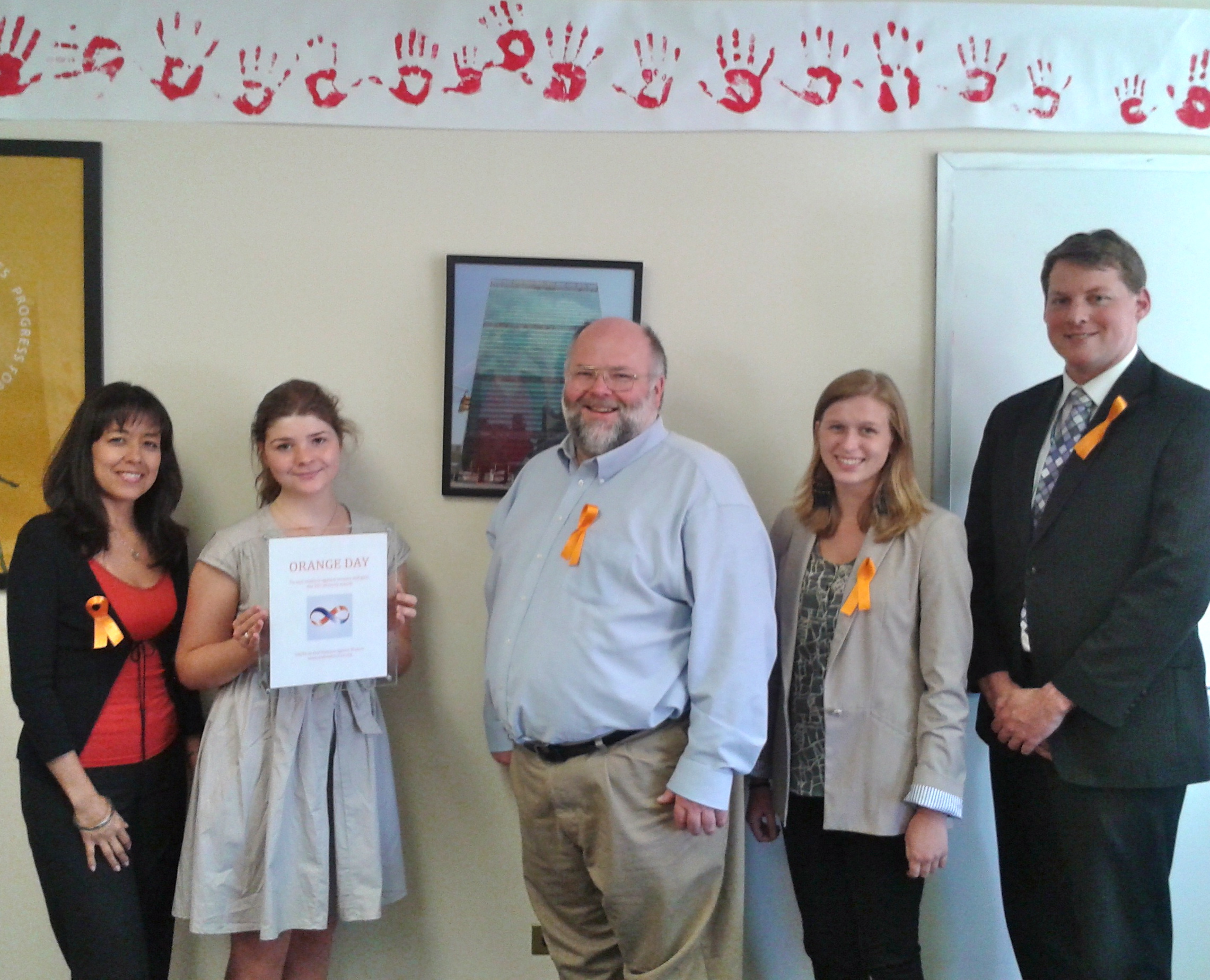
How can we observe Orange Days?
- Wear orange. Tell those you meet why you are wearing orange. Take pictures and share them on social media with an explanation of why you are wearing orange.
- Sign the global call for action to tell governments around the world that you want them to make ending violence against women and girls a top priority.
- Ask 3 people you know to sign the call to action.
- Join SayNO—UNiTE to End Violence Against Women on Facebook and share why you think ending violence against women and girls should be a priority for decision makers around the world.
- Advocate for a Violence Against Women Act that protects all women.
- In August, respond to the questionnaire that will help shape advocacy for Presbyterians and our ecumenical partners at the UN Commission on the Status of Women that will focus on the elimination on all forms of violence against women and girls.
- Consider participating in the 2013 Commission on the Status of Women. Learn more and find an application.
- Teaching elders can preach on the issue of ending violence against women and girls. Check out this sermon by the Rev. Jeff Geary of the White Plains Presbyterian Church.
- Create a group in your worshiping community, mid-council, school or other location to work to end violence against women and girls.
- Use your imagination. Share your ideas.
- Come back each month for more ideas.
Of course working to end violence against women and girls is not a task for one day a month. Orange Days provide a reminder that, in Christ, we are called and freed to love one another and to pursue justice for all—each day and every day.
 The Presbyterian Ministry at the United Nations represents the Presbyterian Church (U.S.A.) at the United Nations. Staff members help inspire, equip and connect Presbyterians for ministry as faithful disciples of Jesus in the global community. The Presbyterian Ministry at the United Nations helps Presbyterians witness to the nations of the world, in the name of Jesus Christ, based on the policies of the Presbyterian Church (U.S.A.) General Assemblies to the United Nations. Mark Koenig is the Director of the Presbyterian Ministry at the UN.



Unbound Social